

Can Insulin Resistance Cause Gastrointestinal Symptoms?
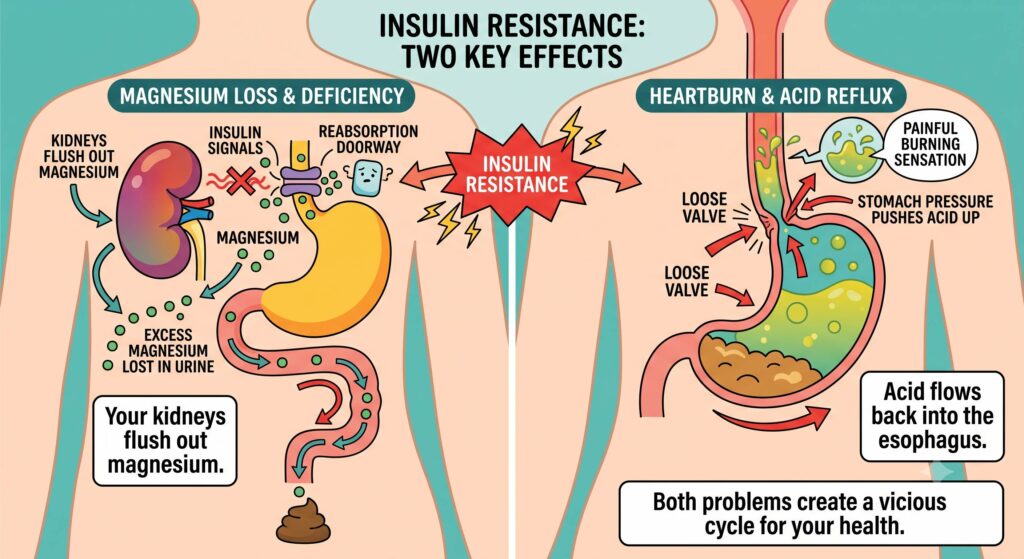
Yes, insulin resistance directly and indirectly contributes to both magnesium deficiency and gastrointestinal symptoms like heartburn (GERD). The mechanisms operate through distinct physiological pathways:
- Magnesium Imbalance & Depletion
Rather than merely blocking absorption in the intestines, insulin resistance creates a systemic “magnesium leak” and impairs cellular transport:
- Renal Wasting (Hypermagnesiuria): Insulin stimulates the kidneys’ distal convoluted tubules to reabsorb filtered magnesium via the TRPM6 epithelial channel. When cells become resistant to insulin, or when elevated blood glucose causes osmotic diuresis, the kidneys fail to reabsorb magnesium effectively, excreting excess amounts in urine.
- Impaired Epithelial Transport: TRPM6 channels are also present in the colon and cecum for active magnesium uptake. Defective insulin signaling at the cellular level downregulates active transport mechanisms needed for optimal gut absorption.
- Intracellular Trapping Deficit: Insulin is required to shift extracellular magnesium into cells. Insulin resistance reduces intracellular magnesium concentrations, impairing ATP production and carbohydrate metabolism, which further worsens insulin sensitivity in a self-perpetuating loop.
- Heartburn, Acid Reflux & GI Issues
Insulin resistance and its associated metabolic disturbances promote heartburn and gastroesophageal reflux disease (GERD) through three primary mechanisms:
- Delayed Gastric Emptying & Motility Issues: Chronically elevated insulin and blood glucose can impair vagal nerve tone and enteric nervous system signaling. This slows stomach emptying (subclinical gastroparesis), causing gastric distension and upward pressure against the lower esophageal sphincter (LES).
- Decreased LES Tone: Metabolic inflammation and altered gastrointestinal hormone signaling (such as elevated GLP-1 or GIP fluctuations and high circulating triglycerides) can trigger transient lower esophageal sphincter relaxations (TLESRs), allowing gastric acid to back up into the esophagus.
- Visceral Adiposity & Intra-Abdominal Pressure: Insulin resistance promotes visceral fat accumulation around abdominal organs. This increases intra-gastric pressure mechanically, pushing acid upwards through the diaphragm.
The Vicious Cycle with PPIs
A common complication arises when heartburn is treated with Proton Pump Inhibitors (PPIs). Long-term PPI use suppresses gastric acid, which significantly inhibits active intestinal magnesium absorption (by altering intestinal pH and inhibiting TRPM6/TRPM7 activity). This worsens systemic magnesium depletion, further deteriorating insulin sensitivity.
Summary:
Insulin resistance makes it harder for your body to hold onto magnesium. While it can slightly reduce how well your gut absorbs the mineral, the bigger issue happens in your kidneys. Normally, insulin signals the kidneys to reabsorb magnesium and keep it in your bloodstream. When your body resists insulin, this signaling fails, causing your kidneys to flush valuable magnesium out through your urine. To make matters worse, insulin is also responsible for moving magnesium inside your cells where it is actually needed, meaning your cells end up starved of this vital mineral.
At the same time, insulin resistance can trigger frequent heartburn and acid reflux. High insulin and blood sugar levels can disrupt nerve signals to your digestive tract, slowing down how fast your stomach empties food. This delay builds up pressure in the stomach, while metabolic inflammation relaxes the valve that keeps stomach acid from flowing upward into the esophagus. A common trap occurs when people take acid-blocking medications (PPIs) for this heartburn, as these drugs drastically cut down gut absorption of magnesium, making the original deficiency and metabolic problems even worse.

Leave a Reply