

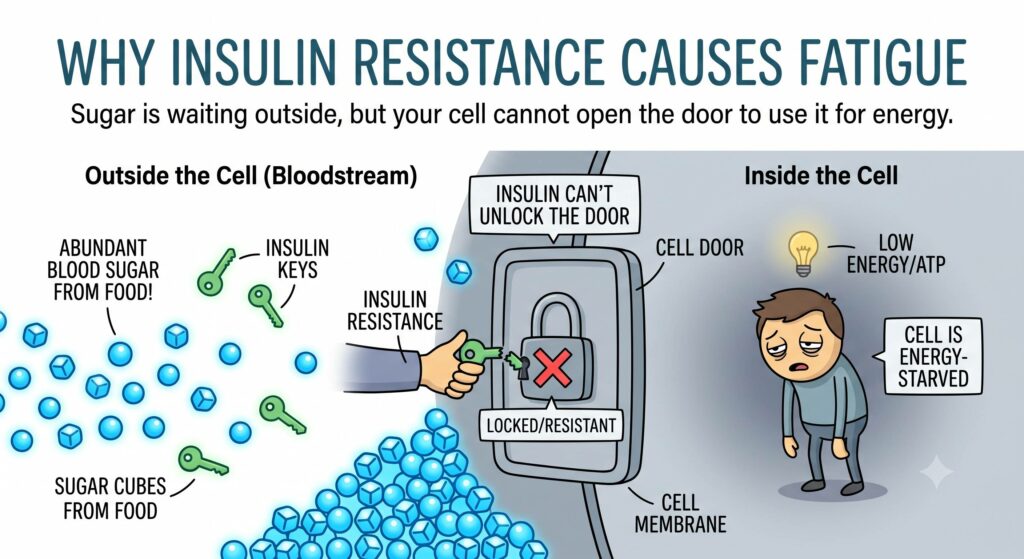
Insulin resistance directly drives both physical and mental fatigue by impairing how your cells absorb and convert fuel into usable energy.
- Cellular Starvation: When muscle, liver, and fat cells become resistant to insulin signaling, glucose transport proteins (GLUT4) fail to translocate to the cell surface efficiently. Circulating glucose remains trapped in the bloodstream instead of entering the cells, leaving tissues starved for fuel despite abundant sugar in the blood.
- Postprandial Reactive Hypoglycemia: To overcome cellular resistance, the pancreas secretes excess insulin (hyperinsulinemia) after meals. This large insulin spike can drive blood sugar down too rapidly, triggering the classic “post-meal crash,” acute lethargy, and brain fog within 1 to 2 hours of eating.
- Mitochondrial Dysfunction & Low ATP Yield: High circulating insulin levels and intracellular lipid accumulation place chronic oxidative stress on mitochondria. This disrupts oxidative phosphorylation and dampens cellular ATP (adenosine triphosphate) generation across skeletal muscle and organ systems.
- Metabolic Inflexibility: Elevated basal insulin inhibits hormone-sensitive lipase (HSL), the enzyme responsible for breaking down stored body fat into free fatty acids. When the body cannot burn glucose efficiently and is blocked from burning stored fat, it experiences persistent energy dips between meals.
- Central Neuroinflammation: Insulin resistance is accompanied by low-grade systemic inflammation, elevating circulating cytokines such as TNF-$\alpha$ and IL-6. These inflammatory messengers can cross the blood-brain barrier, impairing neurotransmitter synthesis and inducing central nervous system fatigue.
- Compromised Sleep Quality: Chronic hyperinsulinemia is strongly correlated with disrupted circadian cortisol rhythms, nighttime blood sugar swings, and obstructive sleep apnea, preventing restorative deep-wave and REM sleep.
Summary:
Insulin resistance directly drives fatigue by preventing cells from effectively accessing and utilizing their primary fuel source. When tissues resist insulin signaling, GLUT4 transporters fail to translocate properly, stranding glucose in the bloodstream and starving skeletal muscles and other tissues of the substrate needed for ATP production. Concurrently, compensatory surges of insulin after eating can trigger reactive blood sugar crashes, while chronic hyperinsulinemia inhibits hormone-sensitive lipase, trapping the body in a state of metabolic inflexibility where it cannot smoothly switch to burning fatty acids for energy between meals.
Beyond fuel delivery issues, insulin resistance impairs cellular machinery and promotes central fatigue. Intracellular lipid accumulation and sustained hyperinsulinemia induce mitochondrial stress, reducing the efficiency of oxidative phosphorylation and cutting overall cellular energy output. Compounding this, dysfunctional adipose tissue releases pro-inflammatory cytokines like TNF-alpha and IL-6 into circulation; these inflammatory signals can cross the blood-brain barrier to trigger neuroinflammation, leading to persistent lethargy and brain fog.
How to Determine if you are Insulin Resistant
A simple, cost-effective way to screen for insulin resistance from a standard lipid panel is calculating your Triglyceride-to-HDL ratio by dividing your total triglycerides by your HDL cholesterol (measured in mg/dL). In an insulin-sensitive metabolism, this ratio is ideally below 2.0 (with optimal target values closer to 1.0). When the ratio climbs to 3.0 or higher, it strongly correlates with hyperinsulinemia, impaired glucose uptake, and the presence of atherogenic small, dense LDL particles, making it a reliable, accessible surrogate marker for insulin resistance without requiring specialized fasting insulin assays.
Leave a Reply