

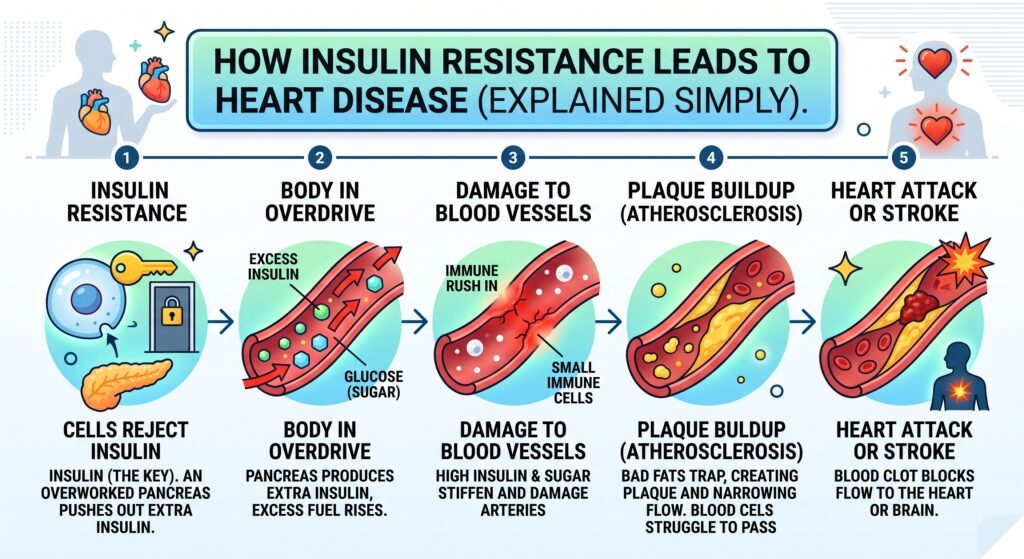
Yes, insulin resistance is one of the primary root drivers of cardiovascular disease. Even years before blood sugar levels rise high enough to trigger a type 2 diabetes diagnosis, insulin resistance silently damages blood vessels, alters blood fats, and accelerates arterial clogging.
What Insulin Resistance Means in Simple Terms
Think of insulin as a key produced by your pancreas. Its job is to unlock your cells so glucose (blood sugar) can enter and be used for energy.
When you develop insulin resistance, the locks on your cells become rusty and stop responding. To compensate, your pancreas pumps out massive amounts of extra insulin to force the sugar inside. While this keeps blood sugar temporarily normal, having chronic, high levels of insulin and excess fuel circulating in the bloodstream sets off a domino effect that directly attacks your heart and blood vessels.
The 5 Pathways Linking Insulin Resistance to Heart Disease
- Blood Vessel Stiffening and Damage (Endothelial Dysfunction)
Healthy arteries produce nitric oxide, a compound that tells blood vessels to relax, widen, and stay supple. Insulin resistance blunts nitric oxide production while increasing chemicals that constrict vessels. As a result, arteries become stiff, narrow, and vulnerable to microscopic tears.
- Creation of “Dangerous” Cholesterol (Atherogenic Dyslipidemia)
Insulin resistance fundamentally alters how your liver processes fats, creating a specific, high-risk cholesterol profile:
- High Triglycerides: Excess fat circulating in the bloodstream.
- Low HDL: Depleted “good” cholesterol, which normally cleans up excess fats.
- Small, Dense LDL: Instead of large, buoyant LDL particles, insulin resistance creates tiny, dense LDL particles that easily slip underneath the lining of artery walls, oxidize, and form plaque.
- Rising Blood Pressure (Hypertension)
High insulin levels signal the kidneys to hold onto excess sodium and water rather than excreting them. High insulin also stimulates the sympathetic nervous system (“fight-or-flight” response), causing blood vessels to tighten. The combination of extra fluid and constricted pipes forces blood pressure upward, wearing out the heart muscle over time.
- Chronic Low-Grade Inflammation
Insulin resistance – especially when accompanied by visceral fat around internal organs – causes fat tissue to release inflammatory proteins (cytokines) into the blood. This chronic inflammation acts like fine sandpaper inside your blood vessels, irritating the arterial lining and signaling the immune system to send white blood cells to the area, accelerating plaque formation.
- “Sticky” Blood and Clot Formation (Hypercoagulability)
Insulin resistance stimulates the production of clotting proteins like PAI-1 (plasminogen activator inhibitor-1) while disabling the body’s natural clot-dissolving mechanisms. If an arterial plaque ruptures, this thick, “sticky” blood forms a clot rapidly, which can completely block blood flow to the heart muscle or brain.
When these five pathways run unchecked for years, the arterial walls progressively narrow and harden (atherosclerosis). Because insulin resistance sits at the very start of this cascade, managing it through dietary changes, regular physical activity, and targeted medical care is one of the most effective ways to protect long-term cardiovascular health.
How to know if you are Insulin Resistant?
Standard checkups often miss early insulin resistance because they rely primarily on Fasting Blood Glucose. Your pancreas can pump out 3 to 5 times more insulin than normal to force blood sugar down, keeping glucose readings looking “normal” on paper for 10 to 15 years while insulin resistance worsens behind the scenes.
To catch insulin resistance early, doctors and labs use markers that measure how hard the body is working to keep that sugar stable.
Key Tests and Hidden Markers
- Triglyceride-to-HDL Ratio (The Quick Standard Lab Hack) You do not need a specialized test for this; it uses numbers from a standard routine lipid panel.
- How to calculate: Divide your Triglycerides by your HDL cholesterol (both in mg/dL).
- Why it works: When liver and fat cells become resistant to insulin, they dump excess fats (triglycerides) into the blood while HDL (“cleanup”) particles get cleared away too quickly.
- Optimal target: Under 1.5.
- Warning sign: Over 3.0 strongly correlates with significant insulin resistance and small, dense LDL particles.
Summary:
Insulin resistance happens when your cells stop responding properly to insulin, the hormone that acts like a key to unlock cells so blood sugar can enter for energy. When these cellular “locks” stop working, your pancreas works overtime to pump out massive amounts of extra insulin to force that sugar inside. While this keeps blood sugar levels looking normal for years, having constantly elevated insulin and excess fuel circulating in your bloodstream quietly damages the delicate inner lining of blood vessels, makes arteries stiff and narrow, and forces your kidneys to hold onto excess salt and water, steadily driving up blood pressure.
Over time, this internal strain sets off a dangerous domino effect that directly attacks your heart. It alters how your liver processes fats – flooding the bloodstream with triglycerides and tiny, dense cholesterol particles that easily burrow into artery walls – while chronic inflammation continuously irritates the blood vessels. Combined with thicker, “stickier” blood that clots more readily, this environment accelerates the buildup of arterial plaque (atherosclerosis), making insulin resistance a leading silent root cause of heart attacks and strokes long before diabetes is ever diagnosed.
Leave a Reply