

Can Insulin Resistance Cause Kidney Damage?
Yes, insulin resistance can directly damage the kidneys over time, even before someone develops full-blown type 2 diabetes.
Think of your kidneys as your body’s master filtration plant. Inside each kidney are roughly one million microscopic filters made of delicate blood vessels that clean waste and excess fluid from your blood.
How Insulin Resistance Strains the System
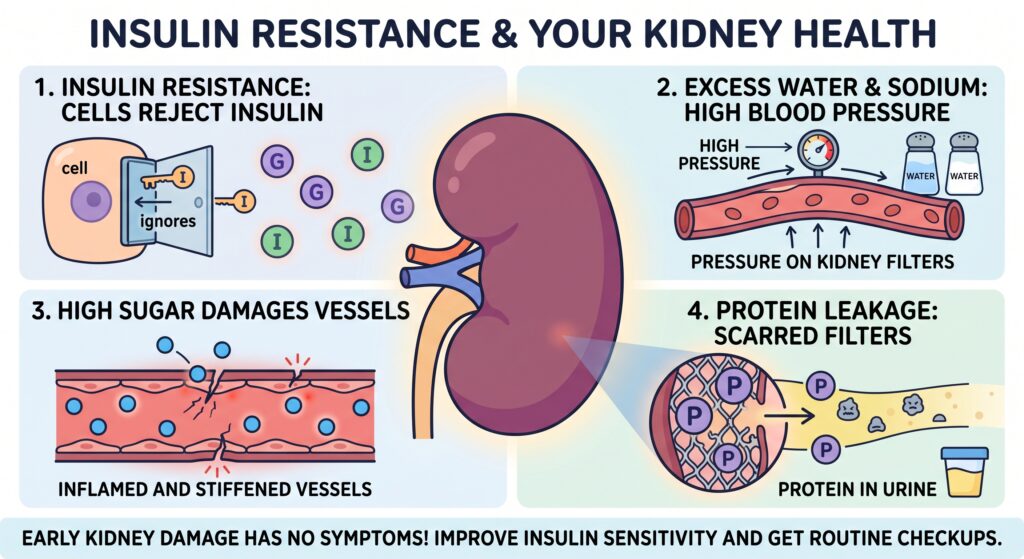
When your cells become resistant to insulin, sugar and excess insulin stay trapped in your bloodstream instead of fueling your cells. This harms the kidneys through four main mechanisms:
- Excess Pressure on Delicate Filters: High insulin signals your kidneys to hold onto extra sodium and water. This raises your blood pressure, blasting delicate kidney filters with too much force day after day.
- Vessel Stiffening and Scarring: Excess circulating blood sugar acts like microscopic grit in the bloodstream, inflaming and stiffening the tiny blood vessels that feed the kidneys.
- Overworking the Filter Mesh: Over time, the microscopic filters become leaky and scarred. Instead of keeping valuable nutrients in your blood, the damaged filters begin leaking vital proteins (like albumin) into your urine.
- Chronic Inflammation: Constantly high insulin levels trigger widespread low-grade inflammation, gradually accelerating the wear and tear on kidney tissues.
The Key Takeaway
Kidney damage from insulin resistance happens quietly over years without early pain or warning signs. The good news is that early damage can often be slowed or prevented by improving insulin sensitivity through a balanced diet, regular movement, quality sleep, and routine urine and blood screenings.
The “Overdrive” Phase (Glomerular Hyperfiltration)
- Early in insulin resistance, the kidneys don’t slow down – they actually work abnormally fast.
- High insulin and altered vessel tone force the kidneys to filter far more blood per minute than normal.
- This is why routine blood tests (like eGFR) often look completely normal or even “great” in early stages, masking the fact that the filtration units are burning out from working overtime.
Direct Damage to the Filter “Net” (Podocyte Injury)
- Kidneys rely on specialized, interlocking cells called podocytes that act like the fine mesh of a strainer.
- Podocytes require healthy insulin signals to maintain their shape and grip. When these cells become resistant to insulin, the “mesh” physically weakens and pulls apart, letting protein spill into the urine even before high blood pressure does mechanical damage.
Uric Acid Retention
- High circulating insulin signals the kidneys to reabsorb uric acid rather than flushing it out in urine.
- Elevated uric acid not only raises the risk of gout and kidney stones, but crystal-independent uric acid also damages the delicate lining of renal blood vessels and fuels inflammation.
Fat Accumulation in Kidney Cells (Lipotoxicity)
- Insulin resistance disrupts how the body handles lipids, spilling excess triglycerides and free fatty acids into non-fat organs.
- Fat droplets accumulate directly inside kidney cells (renal tubular and mesangial cells), creating cellular stress and accelerating tissue scarring.
The Early Detection Blind Spot
- Standard basic metabolic panels often measure creatinine and estimate eGFR, which usually only flag kidney trouble after significant damage is already done.
- The earliest warning sign for metabolic kidney stress is a simple urine test: the Urine Albumin-to-Creatinine Ratio (uACR), which catches trace protein leaks long before blood filtration numbers drop.
Summary:
Insulin resistance places severe, silent stress on your kidneys long before it ever develops into full-blown type 2 diabetes. Your kidneys function as delicate filtration centers packed with millions of tiny blood vessels designed to clean waste from the bloodstream. When insulin levels remain chronically high, the body retains excess sodium and fluid, spiking blood pressure and pounding these fragile filters with excessive force. In the early stages, the kidneys compensate by going into an “overdrive” phase – filtering blood abnormally fast – which often makes standard blood work look deceptively normal while the internal filters quietly wear out and scar.
Beneath the surface, insulin resistance directly weakens the microscopic cell mesh responsible for trapping vital nutrients, while triggering toxic fat buildup and uric acid retention within kidney tissues. Over time, these strained filters become leaky, allowing essential proteins like albumin to spill into the urine. Because this metabolic damage develops without pain or obvious warning signs, screening early with a simple urine protein test – paired with proactive lifestyle steps like balanced nutrition and daily movement – is the most effective way to protect long-term kidney health. Also, pair exercise with dietary supplements like Berberine, Chromium, Ceylon Cinnamon, and Alpha Lipoic Acid to help improve insulin sensitivity and put a stop to hidden kidney damage!
Leave a Reply