

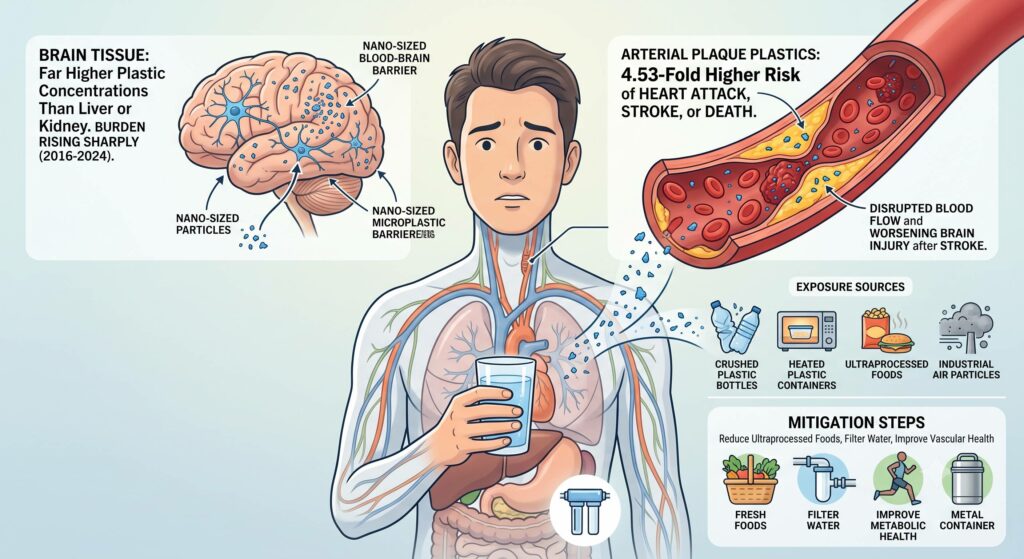
Microplastics have transitioned from an environmental pollutant to an internal biological crisis. Modern clinical and epidemiological research reveals that these microscopic synthetic particles do not simply pass through the digestive tract – they cross protective tissue barriers, accumulate in critical organ systems, and actively promote vascular and neurological damage.
1. Bioaccumulation in Brain Tissue
Microplastics penetrate deeply into metabolic systems, with a surprising preference for neural tissue over primary filtration organs.
- Disproportionate Brain Burden: Human brain tissue harbors significantly higher concentrations of microplastics than either the liver or kidneys. This indicates that Nano plastics readily cross the blood-brain barrier, which typically protects the central nervous system from circulating toxins.
- Rapid Escalation: Human tissue samples reveal that the internal microplastic burden increased sharply between 2016 and 2024, matching the global rise in plastic manufacturing and environmental degradation.
2. Cardiovascular Risk & Vascular Pathology
When microplastics infiltrate the circulatory system, they lodge directly within blood vessels and inflammatory lesions, compounding cardiovascular risk.
| Impact Area | Clinical & Experimental Findings |
| Carotid Artery Plaque | Patients with microplastics embedded in carotid artery plaque face a 4.53-fold higher risk of suffering a heart attack, stroke, or death compared to those without detectable plaque plastics. |
| Thrombus Formation | Plastic particles are frequently found embedded inside human blood clots and diseased vascular walls, contributing to structural plaque instability. |
| Stroke Severity | In animal models, Nano sized plastics physically impair microvascular blood flow, exacerbating cerebral ischemia and worsening brain damage following a stroke. |
3. Primary Vectors of Exposure
Microplastic buildup occurs gradually through daily intake from common consumer products and ambient environments:
- Ultra-Processed Foods (UPFs): Heavy industrial processing and plastic equipment contact contaminate foods before packaging.
- Bottled Beverages & Packaging: Bottled liquids – especially those subject to temperature changes or friction – contain high concentrations of shed plastic particles.
- Contaminated Water & Air: Unfiltered tap water and indoor/outdoor airborne synthetic dust provide continuous background exposure through ingestion and inhalation.
4. Mitigation & Defense Strategies
While zero exposure is unfeasible in the modern world, targeted lifestyle interventions significantly lower ongoing bioaccumulation and bolster metabolic defense mechanisms.
- Modify Food & Beverage Contact: Eliminate ultra-processed foods, avoid heating food or liquids in plastic containers, and switch to glass, stainless steel, or ceramic cookware and storage.
- Filter Drinking Water: Utilize point-of-use filtration (such as reverse osmosis or certified sub-micron carbon filters) to remove micro and Nano plastics from tap water.
- Protect Vascular Integrity: Optimize metabolic health – managing blood pressure, blood sugar, and systemic inflammation – to reinforce the endothelial lining against particle-induced tissue damage.
Microplastics have evolved into a serious systemic health threat, penetrating protective biological barriers and accumulating at disproportionately high concentrations in human brain tissue compared to filtration organs like the liver and kidneys. Between 2016 and 2024, this internal plastic burden rose sharply, carrying severe cardiovascular and neurological consequences. Plastic particles embedded inside carotid artery plaque correlate with a 4.53-fold higher risk of heart attack, stroke, or death, while Nano sized plastics lodge within blood clots, disrupt microvascular blood flow, and worsen brain tissue damage following a stroke.
This internal buildup is driven by daily, ambient exposure to ultra-processed foods, bottled beverages, plastic packaging, contaminated drinking water, and airborne synthetic dust. Because these particles accumulate silently over time, mitigating exposure requires deliberate lifestyle modifications. Individuals can reduce their internal burden and support vascular resilience by eliminating ultra-processed foods, avoiding food contact with heated plastics, filtering drinking water, and managing metabolic health to guard against particle-induced chronic inflammation.
Leave a Reply