

Beyond Plain Water: Why Electrolytes Are the Real Key to Post-Sweat Recovery
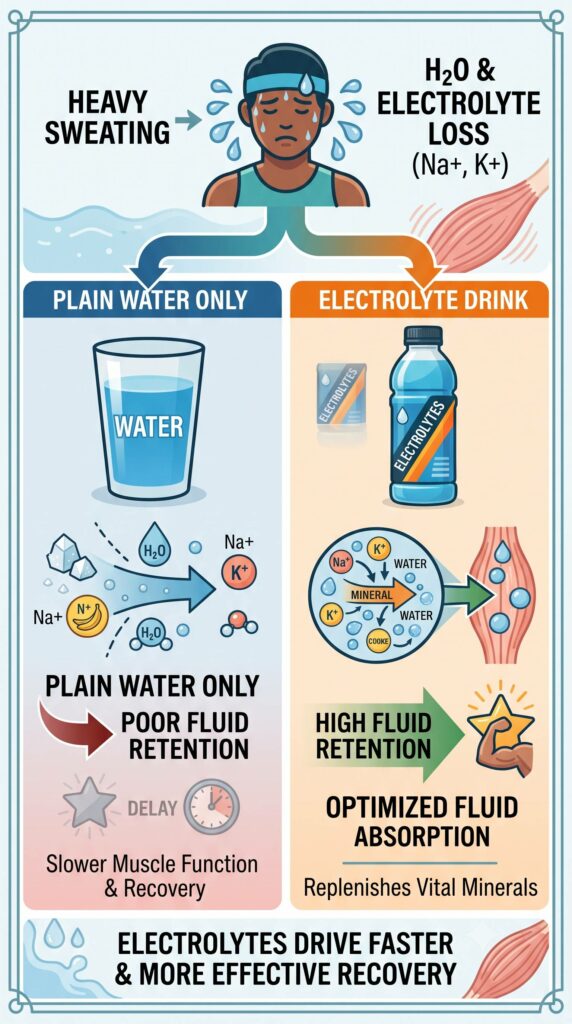
When you break a heavy sweat – whether from an intense workout, manual labor, or extreme heat – your body loses far more than just H₂O. Sweat carries away essential minerals, primarily sodium and potassium, which are critical for regulating fluid balance, nerve signaling, and muscle contractions.
While reaching for a glass of plain water seems like the natural fix, relying solely on water after severe fluid loss can fall short. Without replacing missing electrolytes, plain water dilutes the remaining sodium in your bloodstream, preventing your body from efficiently holding onto the fluids you drink.
Lessons from High-Heat Recovery Research
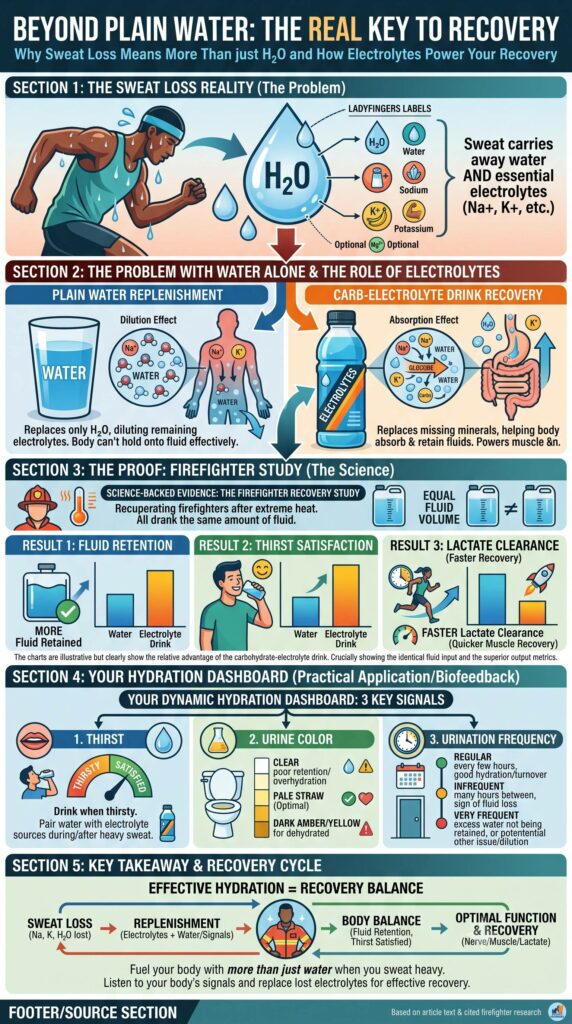
The physical impact of electrolyte replenishment is clearly demonstrated in high-stress physiological studies. In research evaluating firefighters recovering from extreme heat exposure, scientists compared recovery outcomes between participants who drank plain water and those who consumed a carbohydrate-electrolyte beverage.
Even though every participant drank the exact same volume of fluid, the physiological outcomes differed significantly:
- Greater Fluid Retention: Those drinking electrolyte solutions retained more fluid in their systems rather than flushing it out through rapid urine production.
- Sustained Thirst Satisfaction: The electrolyte drink satisfied thirst more effectively over time, helping line up internal thirst cues with actual cellular hydration needs.
- Faster Lactate Clearance: Participants consuming carbohydrate-electrolyte drinks cleared exercise-related blood lactate more rapidly, accelerating muscular recovery and mitigating post-exertion fatigue.
Ditching Rigid Rules for Biofeedback
These findings highlight a core truth: effective hydration isn’t just about how much liquid you gulp down. Rigid guidelines, like drinking a standardized gallon of water a day, fail to account for sweat rate, environmental temperature, and mineral loss.
To get an accurate assessment of your true hydration status, pay attention to three dynamic biofeedback markers:
- Thirst Response: Drink when thirsty, but pair water with electrolyte-rich fluids during or after heavy sweating so your body can absorb the liquid properly.
- Urine Color: Aim for a light, pale straw color. Dark amber indicates dehydration, whereas completely clear urine can be a sign that you are drinking excess water without retaining it.
- Urination Frequency: Regular urination every few hours indicates adequate fluid turnover, while infrequent trips to the restroom signal that your body is holding onto every drop it has left.
By combining electrolyte replenishment with attention to your body’s natural signals, you ensure that post-sweat hydration actually fuels recovery rather than just passing right through you.
When heavy sweating occurs from intense exertion or extreme heat, the body loses essential minerals like sodium and potassium alongside water, both of which are critical for proper fluid retention, nerve signaling, and muscle recovery. Reaching solely for plain water after severe fluid loss falls short because diluting remaining electrolyte levels prevents the body from holding onto the liquid effectively. Research evaluating firefighters recovering from extreme heat demonstrates this principle: even when consuming identical fluid volumes, participants who drank carbohydrate-electrolyte beverages retained significantly more fluid, satisfied their thirst more effectively, and cleared exercise-related blood lactate faster than those who drank plain water alone.
Achieving optimal hydration requires moving away from rigid, fixed water-intake rules and focusing instead on targeted mineral replenishment guided by personal biofeedback. Rather than aiming for arbitrary daily quotas, true fluid needs are best measured through three dynamic indicators: thirst, urine color, and urination frequency. Pairing water with electrolyte sources during or after heavy sweating, targeting a pale straw urine color, and maintaining regular urination every few hours ensures that the fluids consumed are properly absorbed and retained to drive efficient physiological recovery.
InfoGraphic:
Leave a Reply