

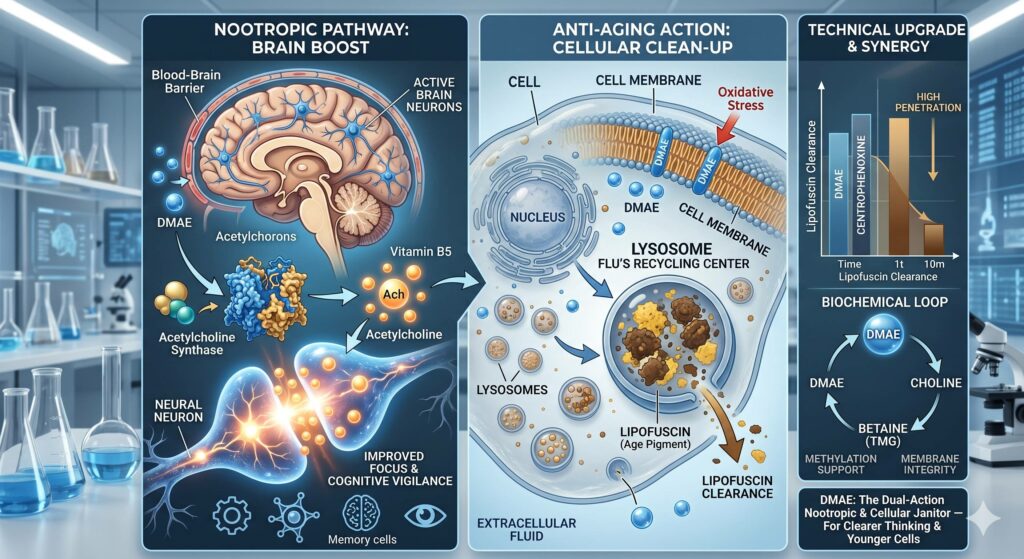
 DMAE (Dimethylaminoethanol) is a naturally occurring compound often found in fatty fish like sardines and anchovies. In the realm of longevity and biochemistry, it is primarily studied for its role as a precursor to acetylcholine and its purported ability to clear out cellular “sludge.”
Here is a breakdown of how DMAE interacts with age pigments and the mechanisms behind it.
1. What is “Age Pigment”?
The technical term for age pigment is lipofuscin. It is essentially cellular “wear-and-tear” debris.
- Composition: It is a brownish-yellow pigment consisting of oxidized fats (lipids) and proteins.
- Accumulation: Unlike other waste products, lipofuscin is difficult for the body to break down. It accumulates in the lysosomes (the cell’s “recycling centers”) of aging cells, particularly in the heart, brain, and skin.
- Impact: Excessive lipofuscin can impair normal cellular function, contributing to the aging process and the appearance of “liver spots” or age spots on the skin.
2. The DMAE-Lipofuscin Connection
DMAE gained popularity in anti-aging circles following research suggesting it could actually flush lipofuscin out of the cells.
The Mechanism of Action
DMAE is thought to act as a membrane stabilizer. Its interaction with age pigments involves a few key theories:
- Lysosomal Efficiency: DMAE may enhance the ability of lysosomes to process and expel metabolic waste. By improving the integrity of the lysosomal membrane, it helps these “incinerators” function more effectively, preventing the buildup of lipofuscin.
- Anti-Oxidative Shield: DMAE is believed to cross-link with cell membranes, making them more resistant to the lipid peroxidation that creates lipofuscin in the first place.
- Cholinergic Support: As a precursor to acetylcholine, DMAE supports the parasympathetic nervous system and cellular communication, which indirectly aids the body’s overall detoxification and repair cycles.
3. Benefits: Topical vs. Oral
DMAE is utilized in two primary ways, each targeting age pigments differently:
Topical Application (Skincare)
In serums and creams, DMAE is famous for its “instant lift” effect.
- Firming: It is believed to stimulate the contraction of small muscles under the skin.
- Pigment Correction: By potentially addressing lipofuscin in the dermis, it may help fade the appearance of certain types of age spots over long-term use.
Oral Supplementation (Nootropic/Longevity)
When taken as a supplement, the focus shifts to internal “cellular housekeeping.”
- Cognitive Clarity: By reducing lipofuscin accumulation in neurons, it is theorized to protect brain function and improve focus.
- Recovery: Its role in acetylcholine production is often touted for improving the mind-muscle connection.
4. Considerations and Reality Check
While the theory of DMAE clearing age pigment is compelling, it is important to note the following:
- Research Gap: Much of the landmark research regarding DMAE and lipofuscin (such as the work by Dr. Richard Hochschild) dates back several decades. While foundational, modern large-scale human clinical trials are less common.
- The “Flushing” Effect: DMAE doesn’t “dissolve” the pigment instantly; rather, it is thought to facilitate the cell’s natural ability to export it over time.
- Side Effects: High doses can lead to muscle tension, headaches, or insomnia due to increased acetylcholine levels.
Summary: DMAE is essentially a “cellular janitor.” By stabilizing membranes and supporting lysosomal function, it helps the body manage and potentially reduce the accumulation of lipofuscin, keeping cells cleaner and more functional as they age.
Are you looking into DMAE more for its cognitive “nootropic” benefits or for its physical anti-aging properties?
Can DMAE work as a Nootropic and Support Anti-Aging?
DMAE occupies a unique niche because it functions as both a “brain booster” and a “cellular stabilizer.” While it is often overshadowed by newer nootropics, its dual-action mechanism makes it a staple for those looking to address both performance and longevity.
Here is how DMAE performs across both domains:
5. Nootropic Properties: The Acetylcholine Catalyst
DMAE is primarily valued in the nootropic community for its role in the cholinergic system.
- Acetylcholine Precursor: DMAE is chemically similar to choline. It is believed to cross the blood-brain barrier more efficiently than standard choline, where it can be converted into acetylcholine-the “learning neurotransmitter.”
- Focus and Vigilance: By elevating acetylcholine levels, users often report improved “mental grip.” This translates to better sustained attention, faster processing speeds, and a reduction in “brain fog.”
- Mood and Lucidity: Some studies suggest DMAE can improve mood and increase physical energy. Interestingly, it has a historical association with lucid dreaming, likely due to its influence on REM sleep and neurotransmitter density.
6. Anti-Aging Properties: The Membrane Guard
In terms of longevity, DMAE’s value lies in its ability to protect the structural integrity of the cell.
- Membrane Stabilization: DMAE incorporates itself into the phospholipid structure of cell membranes. This makes the “skin” of the cell more resilient against oxidative stress and environmental toxins, essentially acting like a structural antioxidant.
- Lipofuscin Management: As previously mentioned, its “cellular janitor” role is its biggest claim to fame in the anti-aging world. By facilitating the removal of metabolic waste (age pigment), it helps maintain the “youthful” efficiency of neurons and skin cells.
- The “Hochschild” Theory: Early research by Dr. Richard Hochschild suggested that DMAE could extend the lifespan of lab animals by significantly reducing the accumulation of cellular debris in the heart and brain.
7. The Technical “Upgrade”: Centrophenoxine
If you are diving deep into the biochemistry of DMAE, it is worth looking at its more potent derivative: Centrophenoxine (also known as Lucidril).
- What it is: A combination of DMAE and pCPA (parachlorophenoxyacetate).
- Why it’s preferred: Centrophenoxine is generally considered superior for lipofuscin clearance. The pCPA component helps the DMAE enter the brain and the cells even more effectively, making it the “professional grade” choice for aggressive age-pigment removal and cognitive enhancement.
8. Biochemical Synergy: The Methylation Connection
Biochemically, DMAE is part of a larger metabolic loop. It can be converted into choline, which then follows a pathway toward Betaine (TMG).
- Methyl Donor Potential: Because it is a dimethylated compound, it indirectly supports the body’s methylation processes.
- Optimization Tip: DMAE works best when paired with Vitamin B5 (Pantothenic Acid). B5 is a co-factor in the conversion of choline to acetylcholine; without enough B5, the “nootropic” spark of DMAE can be somewhat muted.
Comparison at a Glance
| Feature | DMAE (Standard) | Centrophenoxine (Advanced) |
| Primary Use | Daily focus, mild skin firming | Intensive lipofuscin “flush” |
| Brain Penetration | Moderate | High |
| Best For | Maintenance & general wellness | Targeted anti-aging & cognitive repair |
Summary:
DMAE (Dimethylaminoethanol) functions as a versatile cholinergic precursor that effectively crosses the blood-brain barrier to bolster acetylcholine levels, the primary neurotransmitter responsible for learning, memory, and focus. By enhancing the density of these neurotransmitters, DMAE acts as a nootropic that supports mental vigilance and cognitive processing speeds. Its efficacy is often tied to the presence of co-factors like Vitamin B5, which facilitates the biochemical conversion process, and it shares a metabolic relationship with the methylation cycle through its conversion into choline and eventually betaine.
In the context of longevity, DMAE is recognized for its role as a “cellular janitor,” primarily through its ability to stabilize cell membranes and mitigate the buildup of lipofuscin, or age pigment. By improving the integrity of lysosomal membranes, it assists the cell’s internal recycling centers in flushing out oxidized protein and lipid debris that typically accumulate in aging heart, brain, and skin tissues. For those seeking more intensive anti-aging results, the derivative Centrophenoxine is often utilized for its superior ability to penetrate the brain and accelerate the removal of these pigments, maintaining youthful cellular function and structural resilience.
Leave a Reply