

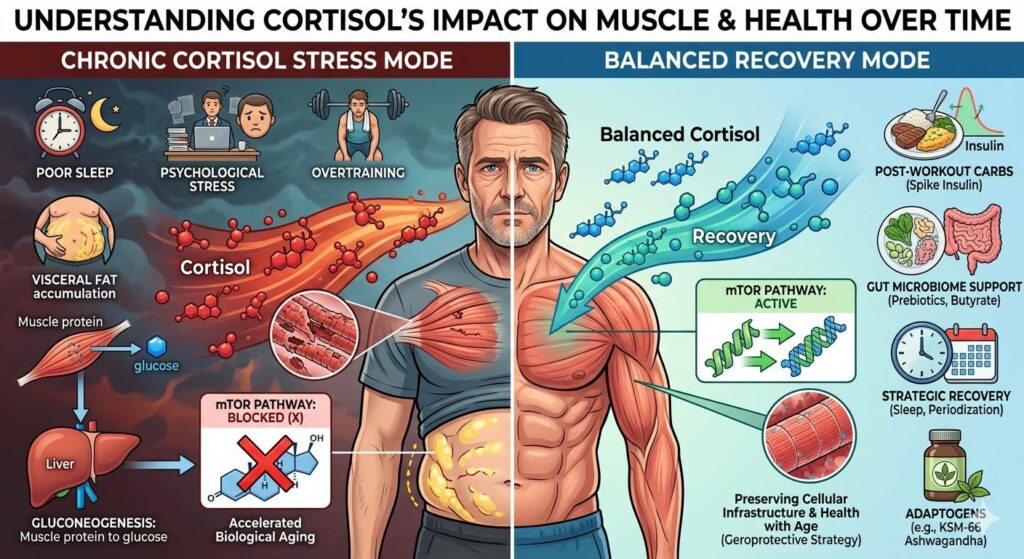
Yes, high cortisol absolutely slows muscle building – and in chronic cases, it actively breaks existing muscle down.
Cortisol is the body’s primary catabolic (tissue-breaking) hormone. While anabolic signals build tissue, cortisol’s job during times of stress is to liberate energy at any cost. To do this, it directly blunts the mTOR pathway – the central cellular mechanism that drives muscle protein synthesis and a major target in the study of cellular longevity. When cortisol remains elevated, it triggers the breakdown of muscle contractile proteins into amino acids, which the liver then converts into glucose for quick energy (a process called gluconeogenesis).
What Causes High Cortisol?
It is important to distinguish between acute and chronic cortisol. Cortisol is not inherently bad; the issues arise from the duration of the exposure.
| State | Source | Effect on Muscle |
| Acute | A heavy lifting session, a cold plunge, or short-term fasting | Helpful. Mobilizes immediate energy to perform the task. Returns to baseline quickly. |
| Chronic | Poor sleep, psychological stress, or training volume drastically outpacing recovery | Destructive. Blocks muscle repair, promotes visceral fat storage, and accelerates biological aging. |
When you are running a demanding, high-frequency training program like a Push/Pull/Legs split, the physical stress creates frequent acute cortisol spikes. If recovery protocols (sleep, nutrition, rest days) fall short, those acute spikes merge into a chronically elevated baseline.
Key insight: A healthy cortisol rhythm peaks sharply in the morning to wake you up and drops low at night. Chronic stress blunts this curve, leaving you fatigued in the morning and wired at night.
How to Combat Cortisol as We Age
As we age, our bodies become less resilient to chronic inflammation, and the ratio of catabolic hormones (like cortisol) to anabolic hormones (like testosterone and growth hormone) naturally shifts in the wrong direction. Managing cortisol is a fundamental geroprotective strategy to maintain cellular infrastructure.
Here are the most effective ways to manage it:
- Intra/Post-Workout Carbohydrates: A heavy lifting session floods the system with cortisol. Consuming easily digestible carbohydrates immediately after (or during) a workout spikes insulin. Insulin and cortisol operate on a seesaw; the insulin spike effectively blunts the exercise-induced cortisol response, shifting the body back into a recovery state.
- Target the Gut Microbiome: Systemic inflammation is a primary driver of chronic cortisol. Supporting the gut lining with specific prebiotic fibers (like acacia fiber or inulin) feeds the bacteria that produce short-chain fatty acids (SCFAs) such as butyrate. Butyrate has profound anti-inflammatory effects that help lower the body’s overall stress burden and quiet the hormonal stress response.
- Periodize Training Volume: Muscles are torn in the gym but built in bed. If performance metrics (like grip strength or the number of reps at a given weight) start dropping, it’s a primary indicator that cortisol is outpacing your recovery capacity. Strategically inserting deload weeks allows systemic cortisol to reset.
- Adaptogenic Support: Compounds like Ashwagandha (specifically the KSM-66 extract) have a strong body of clinical evidence showing they can significantly reduce serum cortisol levels and improve subjective stress scores when taken daily.
High cortisol levels actively hinder muscle building and can even break down existing muscle tissue. As the body’s primary stress hormone, chronic cortisol blunts the anabolic mTOR pathway, prompting the body to break down muscle proteins into glucose for immediate energy. While short-term, acute cortisol spikes from intense workouts or fasting are normal and helpful, chronically elevated levels – driven by poor sleep, psychological stress, or overtraining – prevent muscle repair, increase fat storage, and disrupt the body’s natural circadian rhythm.
As we age, managing these chronic cortisol levels becomes a vital strategy for maintaining muscle mass and overall health. You can combat high cortisol by consuming carbohydrates after a workout to spike insulin, which naturally blunts the stress hormone and initiates the recovery process. Additionally, lowering systemic inflammation through gut-supporting prebiotic fibers, scheduling strategic rest periods to prevent overtraining, and supplementing with evidence-backed adaptogens like Ashwagandha can help reset your body’s stress response and protect your cellular health over time.
Leave a Reply