

Nature’s Blueprint for Physical Comfort: Why White Willow Bark Belongs in Your Daily Routine
Before synthetic pain relievers lined supermarket shelves, ancient herbalists turned to the bitter bark of the European white willow tree (Salix alba). Records dating back to Hippocrates document the use of willow bark tea for soothing throbbing heads and easing stubborn joint aches.
Modern research confirms what traditional healers observed for centuries: white willow bark provides dependable, plant-based relief – without the harsh gastrointestinal distress frequently caused by over-the-counter NSAIDs.
The Natural Chemistry of Salicin
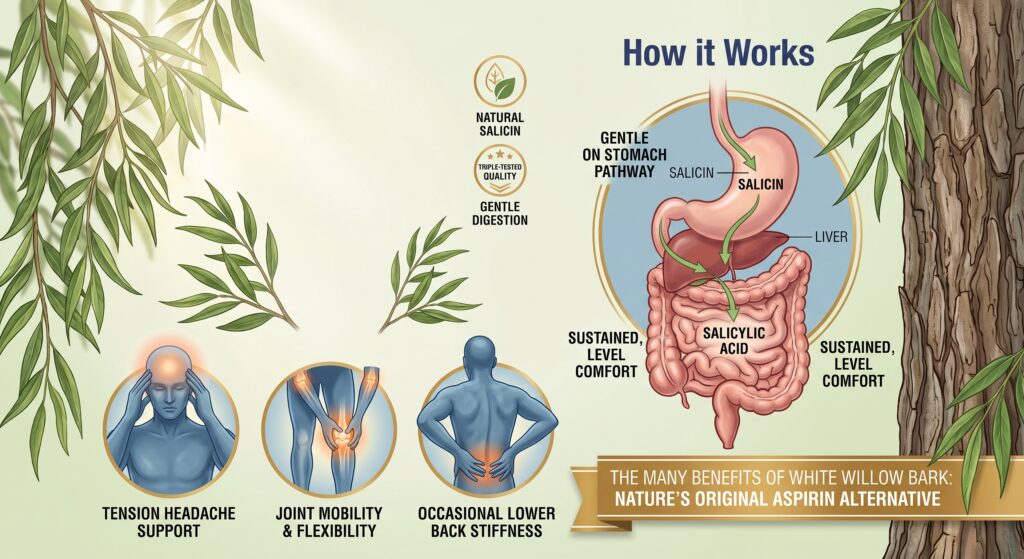
The primary active compound in willow bark is salicin, a bitter glycoside that served as the chemical inspiration for synthetic aspirin (acetylsalicylic acid). However, the human body processes the whole plant differently than an isolated drug:
- Gentler Digestive Transit: Synthetic tablets dissolve immediately in the stomach, often stripping away the protective mucous barrier and causing acid irritation. Whole willow bark passes largely intact through the stomach into the lower intestines.
- Sustained Metabolic Conversion: Intestinal bacteria hydrolyze salicin into saligenin, which the liver then metabolizes into salicylic acid. This gradual, sustained conversion provides level, steady comfort that persists throughout the day rather than a short spike and crash.
- The Bioflavonoid Entourage: Whole bark delivers an array of polyphenols, tannins, and flavonoids (including quercetin and rutin). These natural antioxidants protect cell walls and help modulate COX-2 and NF-κB inflammatory enzymes.
Targeting Occasional Headaches & Neck Tension
Dull, throbbing head discomfort is frequently driven by vascular fluctuations and upper spinal muscle contraction – often triggered by screen strain, daily stress, or poor posture.
Taking white willow bark at the first sign of tension helps inhibit local prostaglandin synthesis, relaxing constricted tissues and mitigating pressure around the temples, forehead, and cervical spine.
Reclaiming Joint Flexibility and Back Comfort
Whether you are recovering from heavy barbell squats, managing a long day of physical labor, or navigating morning stiffness in your knees and fingers, tissue inflammation restricts natural range of motion.
By modulating inflammation at the cellular level, willow bark encourages fluid mobility in weight-bearing joints. It eases connective tissue tenderness without altering blood-clotting factors to the extreme degree seen with high-dose synthetic alternatives.
How to Use White Willow Bark for Best Results
For reliable potency and purity, choose a standardized, whole-bark formula free from synthetic binders. Taking one capsule of Solaray White Willow Bark 400 mg two to three times daily with meals delivers consistent levels of active salicin. For acute muscular strain or persistent joint flare-ups, dosage can be adjusted under the guidance of your healthcare practitioner.
Pairing consistent botanical support with proper hydration and gentle mobility work gives your body a reliable, gut-friendly foundation for lasting physical ease.
Leave a Reply