
Are Migraines Linked To Under Methylation?
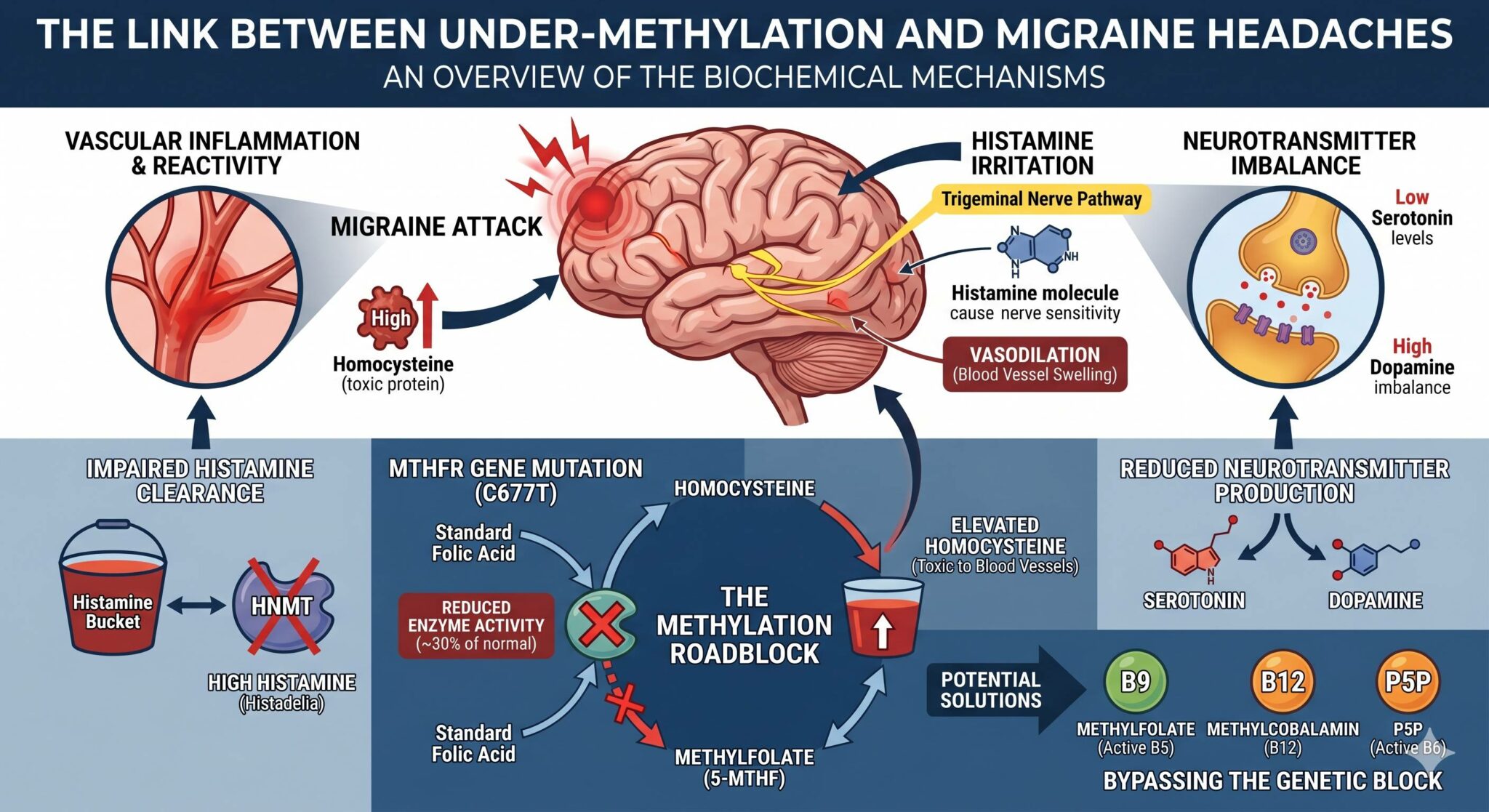
Yes, there is a significant and scientifically recognized link between migraine headaches and under-methylation (as well as general methylation dysfunction). While the mainstream medical community often focuses on managing symptoms, functional medicine and recent genetic research suggest that a “glitch” in your body’s methylation cycle can be a primary driver of migraine frequency and severity.
The connection primarily revolves around three areas: homocysteine levels, histamine regulation, and neurotransmitter balance.
1. The Genetic Link: The MTHFR Factor
The most well-documented connection is the MTHFR gene mutation (specifically the C677T variant). Under-methylation often occurs when the MTHFR enzyme doesn’t function at 100% capacity.
- The Problem: If you have this mutation, your body struggles to convert folic acid into its active form (methylfolate).
- The Result: Without enough methylfolate, your body cannot properly “recycle” a protein called homocysteine.
- The Migraine Connection: High levels of homocysteine are toxic to the lining of your blood vessels. This causes vascular inflammation and makes blood vessels in the brain more “reactive.” Studies show that people with the MTHFR mutation are significantly more likely to suffer from migraine with aura.
2. The Histamine Factor (The “Histadelia” Link)
In functional medicine, under-methylation is often synonymous with High Histamine (a state known as histadelia).
- Methylation is the “Off Switch” for Histamine: One of the primary ways your body breaks down histamine is through a process called methylation (using the HNMT enzyme).
- Vasodilation: Histamine is a powerful vasodilator – it makes blood vessels swell and expand.
- The Trigeminal Nerve: Excess histamine can irritate the trigeminal nerve, which is the main pain pathway involved in a migraine attack. If you are an under-methylator, you likely have a “full bucket” of histamine that your body can’t empty, making you highly sensitive to triggers like red wine, aged cheeses, or seasonal allergies.
3. Neurotransmitter Imbalance
Methylation is the “master builder” for your brain chemicals. If you are under-methylating, you may have chronic deficiencies in:
- Serotonin: Known as the “calming” chemical. Low serotonin levels are a classic hallmark of both under-methylation and migraine susceptibility. When serotonin drops suddenly, it can trigger the neuropeptide release that starts a migraine.
- Dopamine & Norepinephrine: Imbalances here can lead to the high-stress, “perfectionist” personality traits often seen in the under-methylation biotype, which further contributes to stress-induced migraines.
Summary Table: Under-Methylation vs. Migraine Symptoms
| Mechanism | Effect of Under-Methylation | Impact on Migraines |
| Homocysteine | Levels become elevated. | Damages blood vessels; increases vascular pain. |
| Histamine | Levels remain high (low clearance). | Causes blood vessel swelling and nerve irritation. |
| Serotonin | Production is sluggish. | Lowers the “migraine threshold” in the brain. |
| Folate Status | Low functional (methyl) folate. | Impairs cellular repair and DNA expression. |
Is there a “fix”?
Many people find relief by bypassing the “broken” parts of the cycle. This often involves:
- Switching Folic Acid for Methylfolate: Using the active form of B9.
- Supporting with B12 & B6: Using methylcobalamin and P5P (active B6).
- SAMe Supplementation: Providing the body with direct methyl donors (though to much SAMe can cause homocysteine levels to raise, only take as recommended on the label).
- TMG – TriMethylGlycine is a methyl donor supplement that bypasses the gene MTHFR mutation to boost methyl stores and directly lowers homocysteine levels.
A Note of Caution: If you suspect you are an under-methylator, it’s best to get a Whole Blood Histamine or MTHFR genetic test. Over-methylating can happen (taking too many methyl donors) can sometimes cause its own set of issues, this is why it is important to not take more then what is recommended on the bottle of your methyl b-complex supplement.
The connection between migraine headaches and under-methylation is rooted in a biochemical “glitch” often driven by the MTHFR gene mutation. When the methylation cycle is impaired, the body struggles to convert folic acid into its active form, leading to a buildup of homocysteine. This amino acid is toxic to the vascular system in high amounts, causing inflammation and making blood vessels in the brain hypersensitive. Consequently, individuals with these genetic variants are significantly more prone to migraines with aura, as their bodies lack the necessary methyl donors to maintain healthy blood vessel function and prevent cellular stress.
Beyond genetics, under-methylation directly impacts the body’s ability to regulate histamine and neurotransmitters. Methylation acts as the primary “off switch” for histamine; without it, histamine levels remain elevated, leading to vasodilation and irritation of the trigeminal nerve – the main pain pathway involved in a migraine attack. Simultaneously, poor methylation hinders the production of stabilizing chemicals like serotonin, which lowers the brain’s “migraine threshold.” By addressing these deficiencies through active B-vitamins like methylfolate, many sufferers can bypass these metabolic roadblocks and reduce the frequency and severity of their attacks.
Leave a Reply