

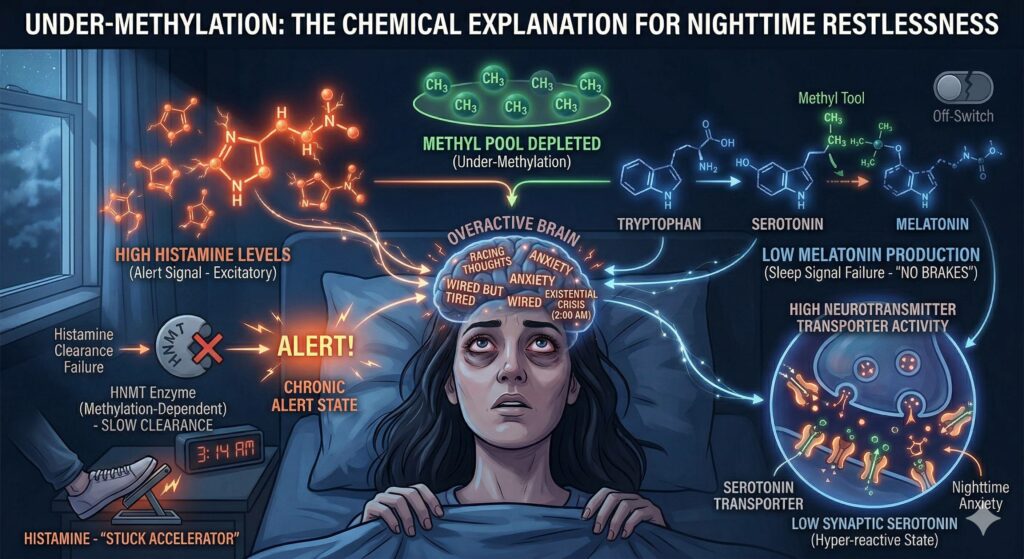
Under-methylation (or hypomethylation) occurs when the body lacks enough methyl groups (CH3) to perform vital biochemical reactions. When it comes to your sleep-wake cycle, this deficiency acts like a double-edged sword: it prevents you from making the “sleepy” chemicals while failing to clear out the “awake” ones.
Here is the breakdown of how this metabolic hiccup disrupts your night.
1. The Melatonin Shortage
The most direct link to sleep is the production of melatonin, your body’s primary sleep-signal hormone.
- The Pathway: Your brain converts the amino acid tryptophan into serotonin, which is then converted into melatonin.
- The Methyl Trap: This final conversion step – turning serotonin into melatonin—requires a methyl group.
- The Result: If you are under-methylated, your “factory” lacks the tools to finish the job. You may have enough serotonin, but you can’t efficiently turn it into melatonin, leaving you without the chemical signal needed to initiate sleep.
2. Histamine Excess (The “Alert” Signal)
While melatonin tells you it’s time to sleep, histamine is the chemical that keeps you alert and focused.
- Breakdown Failure: The body clears histamine from the brain primarily through an enzyme called HNMT (Histamine N-methyltransferase). As the name suggests, this enzyme is strictly dependent on methylation.
- The Buildup: Under-methylators often have chronically high levels of histamine because they cannot “turn it off” effectively.
- The Result: High histamine acts as an excitatory neurotransmitter in the brain. This leads to the classic “wired but tired” feeling – where your body is exhausted, but your brain is racing, making it incredibly difficult to quiet your thoughts.
3. Neurotransmitter Sensitivity
Methylation also regulates how your brain handles dopamine and norepinephrine (your “stress” and “reward” chemicals).
- Transporter Activity: Under-methylators often have high levels of “transporters” that vacuum up serotonin and dopamine from the gaps between your brain cells (synapses) too quickly.
- The Impact: This can lead to low synaptic serotonin. Since serotonin is necessary for feelings of calm and safety, low levels can make your nervous system hyper-reactive. A minor stressor during the day can easily escalate into nighttime anxiety or an “existential crisis” at 2:00 AM.
Summary: The “Stuck Accelerator”
In short, under-methylation creates a physiological mismatch:
- No Brakes: Low Melatonin (hard to fall asleep).
- Full Gas: High Histamine (hard to stay asleep/quiet the mind).
| Feature | Under-Methylation Impact | Effect on Sleep |
| Melatonin | Decreased production | Difficulty falling asleep (delayed onset) |
| Histamine | Slow clearance (High levels) | Racing thoughts, light sleep, “wired” feeling |
| Serotonin | Low synaptic levels | Frequent waking and poor sleep quality |
| Dopamine | Imbalanced regulation | Nighttime anxiety or restlessness |
Ultimately, under-methylation creates a physiological environment where your brain’s “off-switch” is essentially broken while the “alert” signals remain stuck on high. By viewing sleep through this biochemical lens, it becomes clear that nighttime restlessness is often less about a lack of willpower and more about a manageable metabolic puzzle. Restoring balance to your methyl pool – whether through targeted nutrition, stress management, or specific supplementation – is the key to lowering those internal alarms and finally allowing your nervous system to transition into the deep, restorative sleep it needs to recover.
Leave a Reply