

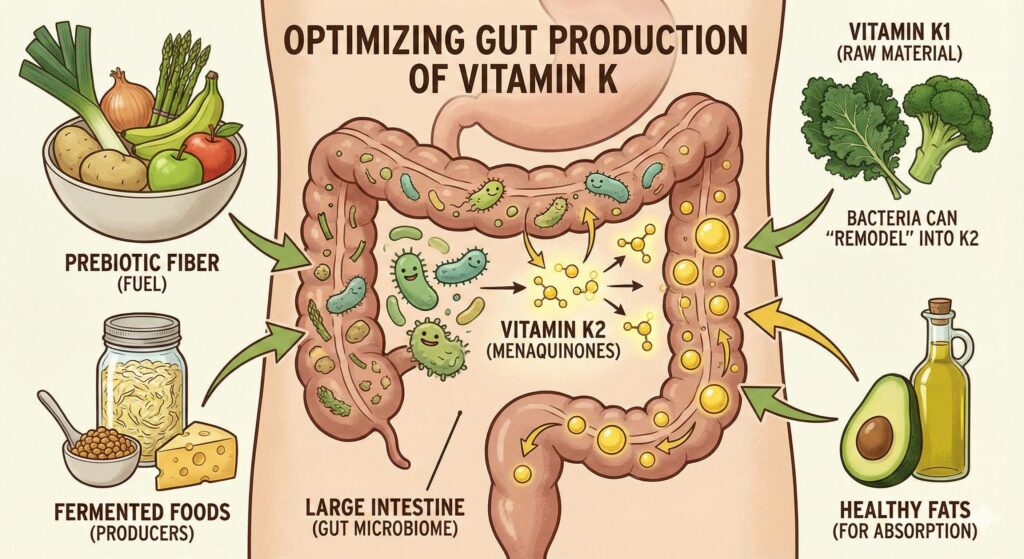
Can taking fiber increase that production of vitamin k?
Yes, increasing your intake of fiber can indirectly increase the production of Vitamin K2 (menaquinones) in your gut, though it is one part of a larger ecosystem.
While you consume Vitamin K1 primarily from leafy greens, the Vitamin K produced in your digestive tract is synthesized by beneficial bacteria in your large intestine. Fiber acts as “fuel” for these bacteria, helping them thrive and produce various nutrients.
How Fiber Increases Production
The bacteria responsible for making Vitamin K2 – such as Bacteroides and certain strains of Lactobacillus and Bifidobacteria – depend on a healthy, diverse environment to function.
- Prebiotic Power: Fiber acts as a prebiotic, meaning it feeds the specific bacteria that synthesize Vitamin K.
- Gut Diversity: A high-fiber diet increases the population of beneficial microbes. The more “good” bacteria you have, the higher the capacity for K2 synthesis.
- pH Regulation: Fermentation of fiber produces short-chain fatty acids (SCFAs), which slightly lower the pH of your gut, making it a more hospitable environment for K-producing bacteria and improving mineral absorption.
What to Consume for Optimization
To optimize your internal production and overall levels of Vitamin K, focus on these three categories:
1. Prebiotic Fibers (The Fuel)
Feed your existing K-producing bacteria with these specific fibers:
- Inulin, Chicory Root: Found in garlic, onions, leeks, and asparagus.
- Resistant Starch: Found in cooled potatoes, green bananas, and legumes.
- Pectin: Found in apples and citrus fruits.
- Acacia Fiber: Soluble fiber, Slow fermentation, Sold by Now Foods
2. Fermented Foods (The Producers)
Some foods already contain the bacteria that make Vitamin K2, allowing them to “set up shop” in your gut or provide the vitamin directly:
- Natto: A fermented soybean dish that is the richest known source of K2.
- Sauerkraut & Kimchi: Raw, fermented vegetables provide both fiber and active bacteria.
- Aged Cheeses: Specifically Gouda, Jarlsberg, and Edam, which are fermented with K2-producing starter cultures.
3. Dietary Vitamin K1 (The Raw Material)
Research suggests that some gut bacteria can “remodel” or convert Vitamin K1 (found in plants) into Vitamin K2. To provide this raw material, eat:
- Dark Leafy Greens: Kale, spinach, collard greens, and Swiss chard.
- Cruciferous Vegetables: Broccoli and Brussels sprouts.
Pro-Tips for Maximum Absorption
Since Vitamin K is fat-soluble, your body (and your gut) cannot absorb it effectively without help.
- Add Healthy Fats: Always eat your leafy greens or fermented foods with a source of fat, such as olive oil, avocado, or grass-fed butter.
- Protect Your Microbiome: Avoid unnecessary use of broad-spectrum antibiotics, which can wipe out the specific bacterial colonies responsible for synthesizing Vitamin K for weeks or months.
Vitamin K2 is primarily synthesized by beneficial bacteria in the large intestine, making a high-fiber diet essential for its internal production. Fiber serves as a prebiotic fuel that nourishes these specific microbes and promotes a healthy gut environment through the creation of short-chain fatty acids (SCFAs), which lower pH levels to favor nutrient synthesis. To optimize this process, you should focus on consuming prebiotic-rich foods like leeks and asparagus, fermented items like natto or sauerkraut that introduce active cultures, and Vitamin K1-rich greens that bacteria can “remodel” into K2. Because Vitamin K is fat-soluble, it is crucial to pair these foods with healthy fats—such as olive oil or avocado—for proper absorption, while simultaneously protecting your microbiome from unnecessary antibiotic use.
Leave a Reply