

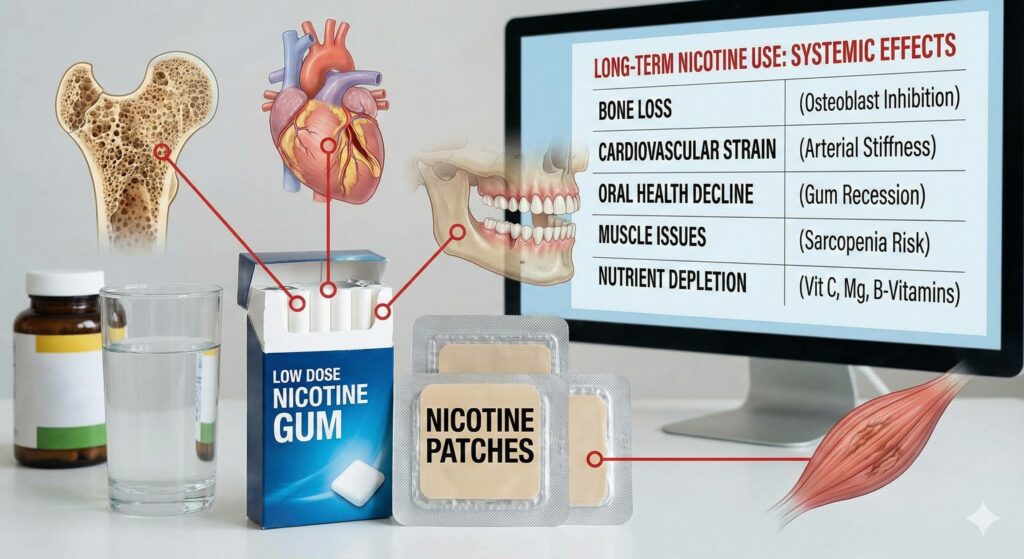
The use of low-dose nicotine gum and patches as “nootropics” for cognitive enhancement is a growing trend, but while these delivery methods avoid the thousands of toxins in combustible tobacco, nicotine itself is a potent pharmacological agent with systemic long-term effects.
Research into long-term, isolated nicotine use (separate from smoking) is still evolving, but several key areas of concern have been identified:
1. Bone Health and Osteoporosis
While most data comes from studies on smokers, research indicates that nicotine itself is a primary driver of skeletal damage:
- Osteoblast Inhibition: Nicotine has a direct toxic effect on osteoblasts (the cells responsible for forming new bone).1 At high or sustained levels, it can even cause these cells to die.
- Calcium and Vitamin D: Nicotine interferes with the body’s ability to absorb calcium and can disrupt the parathyroid hormone-vitamin D axis, both of which are critical for maintaining bone mineral density.2
- Hormonal Balance: In both men and women, nicotine can accelerate the breakdown of estrogen, a hormone essential for preserving a strong skeleton.
- Blood Flow: Nicotine is a vasoconstrictor, meaning it narrows blood vessels.3 This reduces the “nourishment” (oxygen and nutrients) delivered to bones and joints, which can lead to brittle bones and slower healing after injuries or surgeries.4
2. Cardiovascular Impact
Even at low doses, nicotine is a sympathomimetic – it mimics the “fight or flight” response.
- Arterial Stiffness: Long-term use is associated with increased arterial stiffness and reduced “flow-mediated dilation.” Essentially, it makes your blood vessels less flexible, which can lead to hypertension (high blood pressure) over time.5
- Heart Strain: Continuous exposure can cause the heart to work harder by maintaining an elevated resting heart rate and contractility, potentially leading to cardiac remodeling or arrhythmias.6
- Atherosclerosis: Nicotine may promote the hardening of arteries independently of the tars found in cigarettes, though the risk is significantly lower than that of smoking.
3. Cognitive and Brain Effects
While users seek nicotine for immediate “clarity,” the long-term trade-offs are complex:
- Neuroplasticity: Some studies suggest that chronic nicotine use can alter how the brain rewires itself.7 In non-smokers, it has been shown to potentially abolish certain types of inhibitory plasticity, which the brain uses to “filter” information and focus.8
- Dependency and Baseline Shift: The brain quickly “upregulates” its nicotinic receptors to handle the intake.9 Over time, your brain may require nicotine just to reach what used to be your “normal” level of focus, creating a cycle of dependency.10
- Sleep Quality: Nicotine is a stimulant that can significantly disrupt REM sleep and increase vivid dreams/nightmares.11 Poor long-term sleep is a major detractor from the very mental clarity users are seeking.
4. Other Considerations
- Gastrointestinal Issues: Chronic use of gum or lozenges can lead to persistent heartburn (GERD), hiccups, and irritation of the mouth or throat.12
- Insulin Resistance: There is some evidence that nicotine can interfere with insulin signaling, potentially increasing the risk of developing Type 2 diabetes over many years of use.
Comparison of Delivery Methods
| Feature | Nicotine Gum/Lozenges | Nicotine Patches |
| Absorption | Rapid spikes (similar to coffee) | Steady, slow release |
| Addiction Potential | Higher (due to “hits”) | Lower (due to stable levels) |
| Primary Side Effects | Jaw pain, hiccups, GI upset | Skin irritation, vivid dreams |
Further long term use risks:
There are several other significant long-term adverse reactions that were not covered above. While isolated nicotine (without tobacco) is often considered “cleaner,” it remains a systemic drug that affects almost every organ system through its impact on blood flow, hormones, and cell signaling.
Here are the key “missed” areas of concern for long-term use:
1. Oral Health and Gum Recession
Even when avoiding the carcinogens in tobacco, the vasoconstrictive nature of nicotine (narrowing of blood vessels) is particularly damaging to the mouth:
- Receding Gums: Nicotine reduces blood flow to the gingival (gum) tissues.1 Without adequate oxygen and nutrients, the gums can pull away from the teeth (recession), which can lead to tooth sensitivity, root decay, and even tooth loss over time.
- Masking Infection: Because nicotine restricts blood flow, it can mask the signs of gum disease (like bleeding). A user might have an underlying infection but not realize it because the gums don’t bleed as they normally would.
- Mouth Ulcers: Long-term use of gum or lozenges is frequently associated with chronic mouth ulcers or “white patches” (leukoplakia) where the nicotine is held.
2. Hair Thinning and Skin Aging
Nicotine’s effect on the micro-vasculature (the tiniest blood vessels) impacts your physical appearance:4
- Hair Loss: By constricting blood flow to the scalp, nicotine can starve hair follicles of the nutrients needed for growth. It also increases cortisol levels, which can push hair into the “shedding phase” prematurely.
- Premature Aging: Much like “smoker’s skin,” long-term pure nicotine use can lead to reduced skin elasticity and slower cell turnover. This is because the skin isn’t getting optimal oxygenation, leading to a duller complexion and faster formation of fine lines.
3. Gut Microbiome Dysbiosis
Recent research into the gut-brain axis suggests that nicotine significantly alters the balance of bacteria in your digestive system:
- Microbial Imbalance: Chronic nicotine use can decrease the diversity of beneficial bacteria (like Bifidobacterium) and increase pathogenic strains. This “dysbiosis” can lead to increased intestinal permeability (leaky gut).
- Inflammatory Bowel Issues: While nicotine has a complex, sometimes “protective” relationship with Ulcerative Colitis, it is known to significantly worsen Crohn’s disease and other inflammatory markers in the gut.
4. Hormonal and Reproductive Impact
Nicotine acts as an endocrine disruptor, even at low doses:
- Estrogen Metabolism: Nicotine accelerates the breakdown of estrogen. In women, this can lead to irregular menstrual cycles and early menopause. In men, it can disrupt the balance between testosterone and estrogen.
- Insulin Resistance: There is strong evidence that chronic nicotine use interferes with how cells respond to insulin, potentially increasing the risk of Type 2 Diabetes over many years.
5. Delayed Wound Healing
Because nicotine restricts oxygen delivery to tissues, the body’s ability to repair itself is compromised. This is why surgeons often require patients to be nicotine-free (including patches/gum) for weeks before and after surgery. This applies to minor injuries as well – bruises and cuts may take noticeably longer to heal.
Summary Table of Long-Term Risks
| System | Effect of Long-Term Nicotine |
| Oral | Gum recession, masked infections, mouth ulcers. |
| Skin/Hair | Reduced elasticity, hair thinning, premature wrinkles. |
| Metabolic | Insulin resistance, increased risk of Type 2 Diabetes. |
| Endocrine | Disrupted estrogen levels, increased cortisol (stress hormone). |
| Gut | Reduced bacterial diversity, potential “leaky gut” issues. |
More to Consider:
While we have covered the major systemic risks, there are a few “hidden” long-term physiological costs that are often overlooked by those using nicotine solely for its nootropic (cognitive) benefits.
The long-term health implications, here are the remaining critical areas you should be aware of:
1. Muscle Maintenance and Sarcopenia
Nicotine can be counterproductive for physical longevity and strength. It doesn’t just affect the bones; it directly impacts muscle tissue:
- Inhibiting Growth: Nicotine has been shown to interfere with muscle protein synthesis – the process your body uses to repair and grow muscle fibers.
- Myostatin Elevation: Long-term use can increase levels of myostatin, a protein that acts as a “braking system” for muscle growth. Higher myostatin levels make it harder to maintain lean muscle mass as you age, potentially accelerating sarcopenia (age-related muscle wasting).
- Cortisol Spikes: Nicotine triggers the release of cortisol (the stress hormone). Chronic elevated cortisol is “catabolic,” meaning it actively breaks down muscle tissue for energy.
2. The “Nutrient Tax” (Vitamin & Mineral Depletion)
Nicotine acts as a diuretic and a metabolic stimulant, which forces the body to use up certain nutrients at a much faster rate. For someone in the supplement industry, this is a key area of interest:
| Nutrient | Impact of Long-Term Nicotine Use |
| Vitamin C | Nicotine is a major oxidizer. Each “dose” uses up significant Vitamin C to neutralize the resulting free radicals. |
| Magnesium | Nicotine triggers the release of adrenaline, which causes the kidneys to excrete magnesium more rapidly. |
| B-Vitamins | Long-term use is linked to lower levels of B6, B12, and Folate, which are essential for the very “mental energy” users are seeking. |
| Calcium | As mentioned with bone loss, nicotine blocks the absorption of calcium in the gut, regardless of how much you ingest. |
3. Eye Health and Vision
The vasoconstrictive (vessel-narrowing) effect of nicotine is not limited to the heart; it affects the delicate micro-vasculature of the eyes:
- Macular Degeneration: Reduced blood flow to the retina can increase the risk of age-related macular degeneration (AMD) over decades of use.
- Cataracts: Nicotine increases oxidative stress in the lens of the eye, which can contribute to the earlier development of cataracts.
4. Kidney Function
While less discussed than heart health, the kidneys are highly sensitive to blood pressure fluctuations. Chronic nicotine use causes “transitory” spikes in blood pressure that, over many years, can lead to:
- Glomerular Damage: The tiny filtering units in the kidneys (glomeruli) can become scarred or damaged due to restricted blood flow and oxidative stress.
- Proteinuria: Long-term users may eventually show small amounts of protein in their urine, an early sign that the kidneys are under stress.
5. Sleep Architecture (The REM Trade-off)
Nicotine is a stimulant with a relatively short half-life, which creates a “withdrawal” effect during sleep.
- REM Suppression: Even if you fall asleep easily, nicotine often suppresses REM (Rapid Eye Movement) sleep, which is the stage responsible for memory consolidation and emotional regulation.
- Fragmentation: As nicotine levels drop in the blood overnight, the brain may experience “micro-arousals,” leading to sleep that feels less restorative, even if you were technically “unconscious” for 8 hours.
Summary for the “Nootropic” User
The irony of long-term nicotine use for “mental clarity” is that the chronic depletion of Magnesium and B-Vitamins, combined with the suppression of REM sleep, can eventually create a baseline of brain fog that the user then tries to “fix” with more nicotine.
While low-dose nicotine is increasingly adopted for its acute cognitive and energetic benefits, chronic use carries a heavy systemic toll that may ultimately undermine the “mental clarity” users seek. Long-term physiological costs include significant skeletal damage through osteoblast inhibition and calcium malabsorption, alongside oral health decline characterized by gum recession and reduced blood flow to the gingival tissues. Beyond bone loss, nicotine acts as a metabolic and cardiovascular stressor – promoting arterial stiffness, insulin resistance, and elevated myostatin levels that can accelerate muscle wasting. This habit also imposes a significant “nutrient tax” by depleting essential stores of Magnesium, Vitamin C, and B-vitamins, while simultaneously degrading REM sleep architecture. Consequently, the temporary boost in focus often masks a gradual baseline decline, creating a cycle of dependency where the drug is eventually required just to offset the physiological and nutritional exhaustion it causes.
Leave a Reply