

Can Cayenne feed gut bacteria and support better cardiovascular health?
Yes, cayenne pepper (specifically its active compound, capsaicin) provides significant support for both the cardiovascular system and the health of your gut microbiome.1
Cardiovascular Benefits
Cayenne pepper is often referred to as a “circulatory stimulant” because of its rapid effect on blood flow.2 Research highlights several key mechanisms:
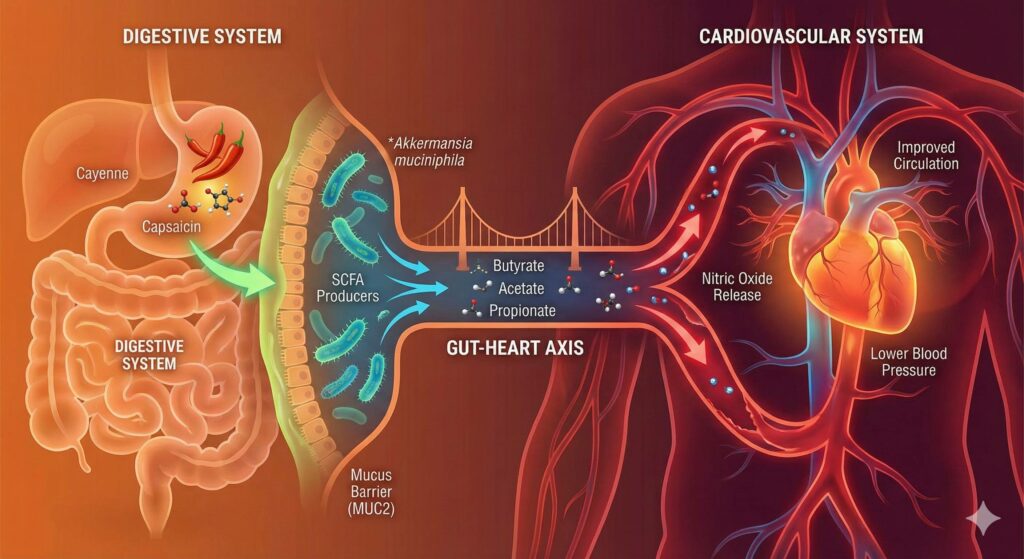
- Vasodilation: Capsaicin activates the TRPV1 receptor, which triggers the release of nitric oxide.3 This helps blood vessels relax and widen (vasodilation), which can lower blood pressure and improve overall circulation.4
- Cholesterol & Lipid Management: Regular consumption has been shown to help lower “bad” LDL cholesterol and triglycerides while potentially raising “good” HDL levels.5
- Anti-Platelet Activity: Cayenne may help prevent excessive blood clotting by inhibiting platelet aggregation, similar to how low-dose aspirin works but through different biological pathways.
- Arterial Protection: Some studies suggest capsaicin can help prevent arterial calcification (the hardening of the arteries) by reducing inflammation and oxidative stress in the vascular walls.6
Impact on Gut Bacteria and SCFAs
There is a growing body of evidence that cayenne acts as a prebiotic-like modulator for the gut. While we usually think of fiber as the primary fuel for gut bacteria, capsaicin significantly alters the microbial environment:7
- Promotion of Beneficial Taxa: Capsaicin has been found to increase the abundance of SCFA-producing bacteria, such as Lachnospiraceae, Ruminococcaceae, and Faecalibacterium prausnitzii.8
- Increased SCFA Production: By shifting the microbiome toward these beneficial species, cayenne consumption is associated with higher levels of Short-Chain Fatty Acids (SCFAs), particularly butyrate (butanoic acid), acetate, and propionate.9
- The Gut-Heart Link: The SCFAs produced in the gut don’t just stay there; they enter the bloodstream and exert anti-inflammatory effects on the heart and blood vessels, creating a “gut-cardiovascular axis.”
Summary Table: Cayenne’s Dual Action
| System | Primary Mechanism | Key Result |
| Cardiovascular | Nitric oxide release & TRPV1 activation | Lower blood pressure; improved flow |
| Microbiome | Selective modulation of bacteria | Increased microbial diversity |
| Metabolic | Fermentation of metabolites | Higher SCFA (Butyrate) levels |
Note on Dosage: While cayenne is beneficial, high doses can cause gastrointestinal irritation in some individuals. Culinary doses (using it as a spice) are generally sufficient to see microbiome benefits without significant distress.
Cayenne and Akkermansia
The relationship between cayenne (capsaicin) and Akkermansia muciniphila is one of the most fascinating examples of how a spice can “engineer” the gut environment to support systemic health.
While many probiotics require you to eat specific fibers, cayenne works by stimulating your own body to produce the “food” that Akkermansia needs to thrive.
The “Feed and Grow” Mechanism
Akkermansia muciniphila is unique because it doesn’t primarily eat the food you swallow; it eats the mucus layer (mucin) that lines your intestines. This is where cayenne comes in:
- TRPV1 Activation: Capsaicin binds to TRPV1 receptors in the gut lining.
- Mucin Production: This activation signals goblet cells to increase the production of Mucin-2 (MUC2), thickening the protective mucus layer.
- A Precision Prebiotic: Because Akkermansia is a specialist in degrading mucin, this surge in “food” allows its population to bloom. In studies, capsaicin consumption significantly increased the abundance of Akkermansia even in subjects on high-fat diets.
Cardiovascular & Metabolic Impact
Boosting Akkermansia through cayenne provides a secondary “shield” for your heart and blood vessels:
1. Strengthening the Gut Barrier (“Leaky Gut”)
A thick mucus layer (fed by Akkermansia) prevents LPS (lipopolysaccharides) – inflammatory toxins from “bad” bacteria – from leaking into your bloodstream. When LPS enters the blood, it triggers systemic inflammation that damages arterial walls and contributes to atherosclerosis (hardening of the arteries).
2. SCFA Synergy
Akkermansia produces acetate and propionate as it breaks down mucus. These SCFAs:
- Signal the liver to reduce cholesterol production.
- Help regulate blood sugar by improving insulin sensitivity.
- Travel to the heart to help reduce oxidative stress in cardiac tissue.
3. Weight and Lipid Management
Higher levels of Akkermansia are consistently linked to lower body fat and healthier lipid profiles. By assisting with weight management and lowering triglycerides, it reduces the overall “workload” on the cardiovascular system.
Summary Table: The Cayenne-Akkermansia Connection
| Action | Result | Cardiovascular Benefit |
| Stimulates Mucin | Thicker gut lining | Reduced systemic inflammation |
| Feeds Akkermansia | Population growth | Better glucose & lipid metabolism |
| Produces SCFAs | Acetate & Propionate | Lower cholesterol & BP support |
Interesting Note: Akkermansia is often called a “next-generation probiotic” because it is difficult to take as a live supplement (it dies quickly in oxygen). Using cayenne to stimulate your own native population is often more effective than trying to take a pill.
Cayenne pepper, through its active compound capsaicin, serves as a powerful dual-action tool for both heart and gut health by activating the TRPV1 receptor to trigger vasodilation and improve systemic blood flow. In the digestive tract, it acts as a unique “precision prebiotic” by stimulating the production of Mucin-2, which provides the essential fuel for the beneficial bacterium Akkermansia muciniphila to thrive. This microbial bloom, alongside the growth of other short-chain fatty acid (SCFA) producers, strengthens the gut barrier and prevents inflammatory toxins (LPS) from entering the bloodstream, effectively protecting the cardiovascular system from oxidative stress and arterial damage through the gut-heart axis.

Leave a Reply