
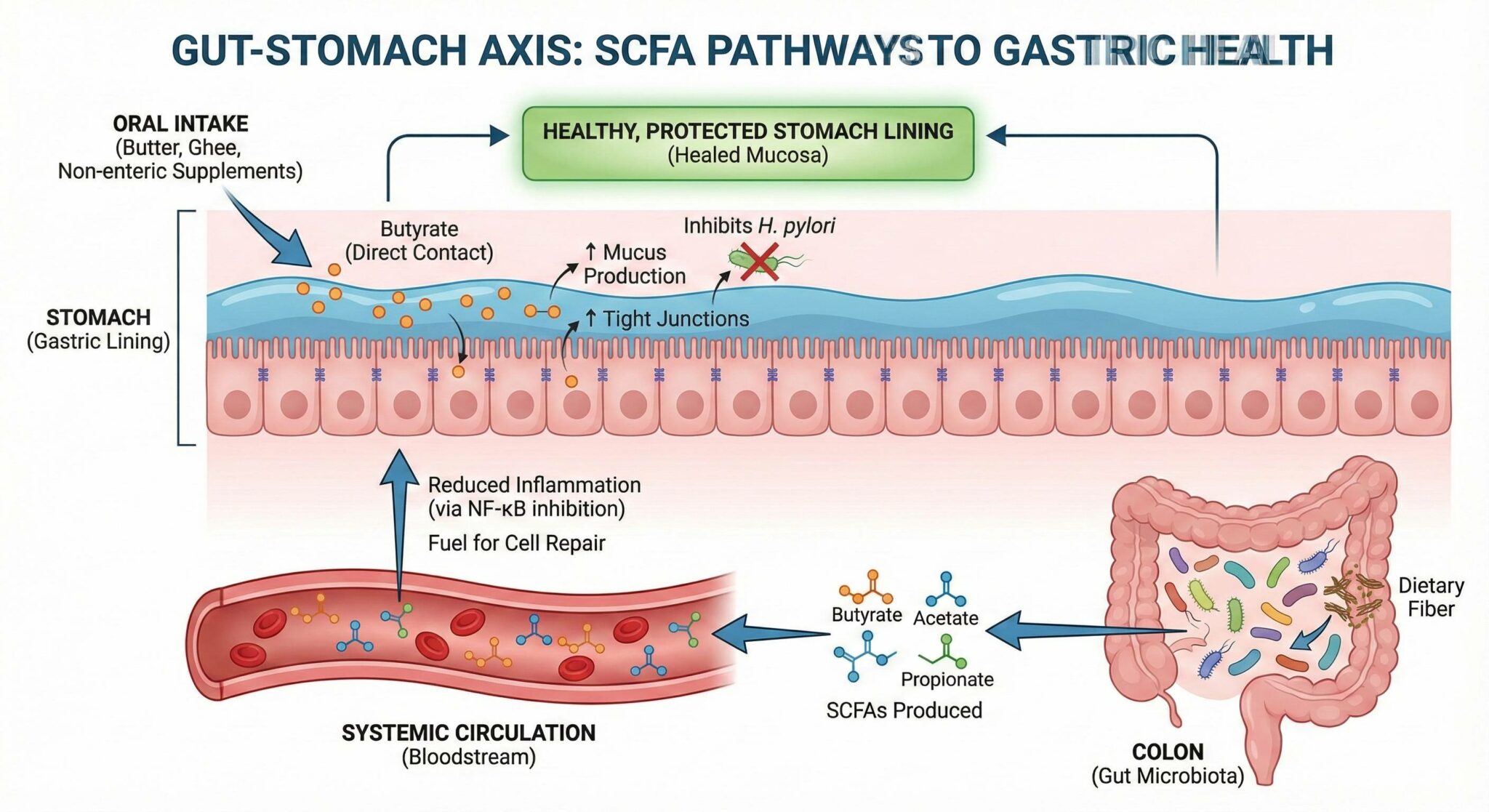
Yes, Short-Chain Fatty Acids (SCFAs)—particularly butyrate—can help build, protect, and repair the stomach lining.
While SCFAs are most famous for their role in the colon (large intestine), recent research shows they also play a critical role in gastric (stomach) health. They act as a “shield” for the stomach mucosa (the mucous membrane layer of the stomach) by reducing inflammation and fueling the repair of damaged cells.
1. How SCFAs “Build” and Protect the Stomach Lining
SCFAs, especially butyrate, work through three main mechanisms to strengthen the stomach lining:
- Boosting Mucus Production:
A healthy stomach lining relies on a thick layer of mucus to protect itself from its own acid. Butyrate has been shown to increase the production of gastric wall mucus (GWM). This mucus acts as a physical barrier, preventing acid and digestive enzymes from eating away at the stomach wall. - Strengthening Tight Junctions:
The cells of your stomach lining need to be packed tightly together to prevent “leaks.” SCFAs help upregulate proteins (like occludin and zonulin) that form tight junctions. This “seals” the gaps between cells, preventing pathogens and toxins from crossing into the bloodstream. - Accelerating Repair (Cell Turnover):
If the stomach lining is damaged (e.g., by alcohol, NSAIDs, or stress), it needs to rebuild quickly. SCFAs provide energy to epithelial cells and stimulate the release of peptides that speed up cell regeneration and wound healing.
2. Specific Benefits for Stomach Conditions
- Ulcer Healing: Studies on mice have shown that sodium butyrate can significantly reduce the size of gastric ulcers. It does this by lowering oxidative stress (acting like an antioxidant) and reducing the inflammatory cytokines that make ulcers worse.
- Defense Against H. pylori: Helicobacter pylori is a bacteria that destroys the stomach lining. Research suggests that butyrate can inhibit the growth of H. pylori and reduce the inflammation it causes, potentially acting as a supportive therapy during infection.
3. The “Location” Problem (Crucial Nuance)
This is the most important part for you to understand: Where the SCFAs come from matters.
- From Fiber (The “Back Door” Route): When you eat fiber, your gut bacteria ferment it in your colon (far past the stomach) to create SCFAs. Most of these are used right there in the colon. Only a small amount enters your bloodstream and circulates back to the stomach. This provides systemic anti-inflammatory benefits but might not be enough for direct stomach repair.
- From Diet/Supplements (The “Front Door” Route): To get the maximum “building” benefit for the stomach specifically, the SCFAs likely need to touch the stomach lining directly.
- Food: Butter and ghee are rich natural sources of butyrate.
- Supplements: Oral butyrate supplements (like sodium butyrate) pass through the stomach. If they are not enteric-coated (designed to only release in the colon), they can release butyrate directly in the stomach, potentially offering that direct contact benefit for the gastric lining.
Summary Table: SCFA Effects on the Stomach
| Feature | Benefit to Stomach Lining |
| Mucus Layer | Increases thickness, protecting against acid damage. |
| Inflammation | Reduces inflammation by inhibiting the NF-κB pathway (a pro-inflammatory switch). |
| Cell Integrity | Tightens seals between cells to prevent “leaky” stomach lining. |
| Damage Control | Accelerates healing of erosions or ulcers caused by alcohol/NSAIDs. |
Next Step
Would you like me to analyze the ingredients of any specific gut-health supplements you are considering to see if they provide a direct source of butyrate for the stomach?
In Summary
Short-Chain Fatty Acids (SCFAs), particularly butyrate, play a vital role in building and maintaining a healthy stomach lining by acting as both a protective shield and a repair agent. They strengthen the gastric barrier by stimulating the production of mucus to defend against acid damage and by reinforcing the “tight junctions” between cells to prevent permeability or “leaks.” Additionally, SCFAs accelerate the healing process for ulcers and reduce inflammation caused by alcohol, NSAIDs, or pathogens like H. pylori. While the colon produces SCFAs from fiber, consuming direct sources such as butter, ghee, or non-enteric supplements is often the most effective way to ensure these reparative compounds directly contact and benefit the stomach mucosa.
Leave a Reply