

Can SFCAs from good gut health improve sleep?
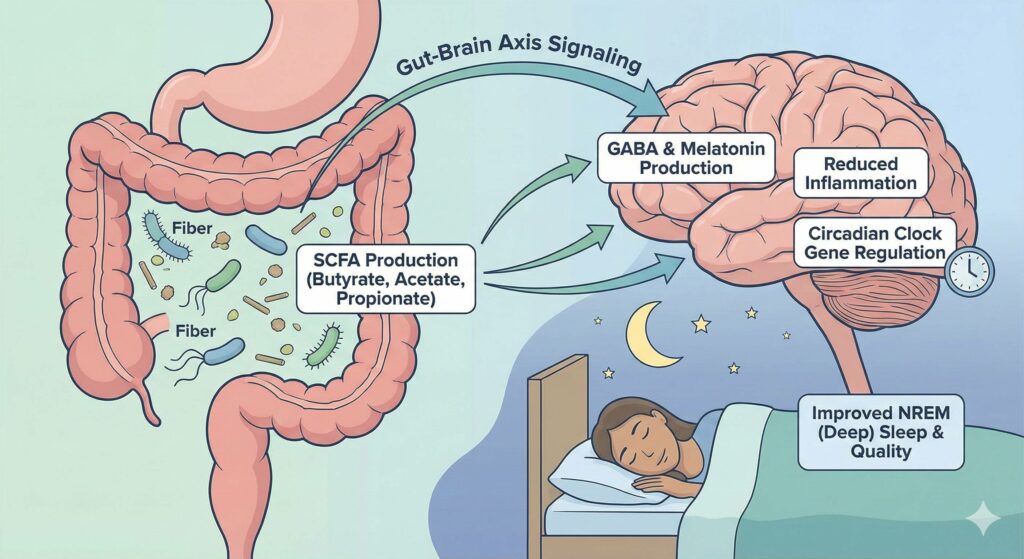
Yes, research into the gut-brain axis suggests a powerful connection between short-chain fatty acids (SCFAs) and sleep quality. While the science is still evolving, current evidence (including studies from 2024 and 2025) indicates that a healthy gut microbiome and the production of SCFAs like butyrate, propionate, and acetate play a direct role in regulating your sleep-wake cycle.
How SCFAs Influence Your Sleep
SCFAs are the primary byproducts of fiber fermentation by gut bacteria. They improve sleep through several biological pathways:
- Neurotransmitter Synthesis: SCFAs influence the production of key “sleep chemicals.”
- GABA: Certain bacteria (like Lactobacillus and Bifidobacterium) use SCFAs to facilitate the production of GABA, the brain’s primary inhibitory neurotransmitter that helps you “switch off” for the night.
- Serotonin & Melatonin: Over 90% of the body’s serotonin is produced in the gut. SCFAs stimulate the cells that produce serotonin, which is the direct precursor to melatonin, the hormone that regulates your circadian rhythm.
- Circadian Rhythm Regulation: Recent studies (2025) have shown that SCFAs interact with “clock genes” (such as PER1, PER2, and BMAL1) in peripheral tissues. By inhibiting histone deacetylases (HDACs), SCFAs help “set” these internal clocks, aligning your metabolic rhythm with your sleep cycle.
- Reducing “Neuro-inflammation”: Butyrate, in particular, strengthens the blood-brain barrier (BBB) and the intestinal lining. This prevents inflammatory markers (cytokines) from leaking into the bloodstream and reaching the brain, where they would otherwise cause “hyperarousal” and fragmented sleep.
Specific SCFAs and Their Roles
| SCFA | Primary Sleep Benefit |
| Butyrate | Shown to increase NREM (Deep) sleep duration. It is a potent anti-inflammatory that helps protect the brain from stress-induced sleep disruption. |
| Propionate | Influences the production of satiety hormones and helps regulate the “active” phase of your circadian rhythm. |
| Acetate | Crosses the blood-brain barrier easily and is involved in appetite regulation and central sleep signaling. |
The “Fecal Paradox”
Interestingly, some studies have found that people with insomnia actually have higher levels of SCFAs in their fecal samples. This isn’t because they are making too much; rather, it often indicates poor absorption. If the gut lining is damaged or the transit time is too fast, the body cannot utilize the SCFAs, and the sleep-promoting benefits are lost.
How to Support Your Gut for Better Sleep
- High-Fiber “Prebiotics”: Foods like chicory root, garlic, onions, and legumes are fermented into SCFAs.
- Resistant Starch: Cold cooked potatoes or green bananas are excellent for specifically boosting butyrate production.
- Consistency: The gut microbiome follows its own circadian rhythm. Eating at the same time every day helps “train” your bacteria to produce SCFAs when you need them most.
- Targeted Probiotics: Strains of Bifidobacterium longum and Lactobacillus plantarum have been shown in clinical trials to improve sleep scores by modulating the gut-brain axis.
The connection between Short-Chain Fatty Acids (SCFAs) and sleep quality is driven by the gut-brain axis, where metabolic byproducts like butyrate act as critical signaling molecules. These SCFAs promote restful sleep by facilitating the production of GABA and melatonin, reducing systemic inflammation that causes “hyperarousal,” and directly interacting with circadian clock genes to synchronize the body’s internal rhythms. By strengthening the intestinal barrier and the blood-brain barrier, SCFAs ensure that sleep-disrupting inflammatory cytokines are kept at bay, ultimately increasing the duration of NREM (deep) sleep and improving overall sleep architecture.
Leave a Reply