

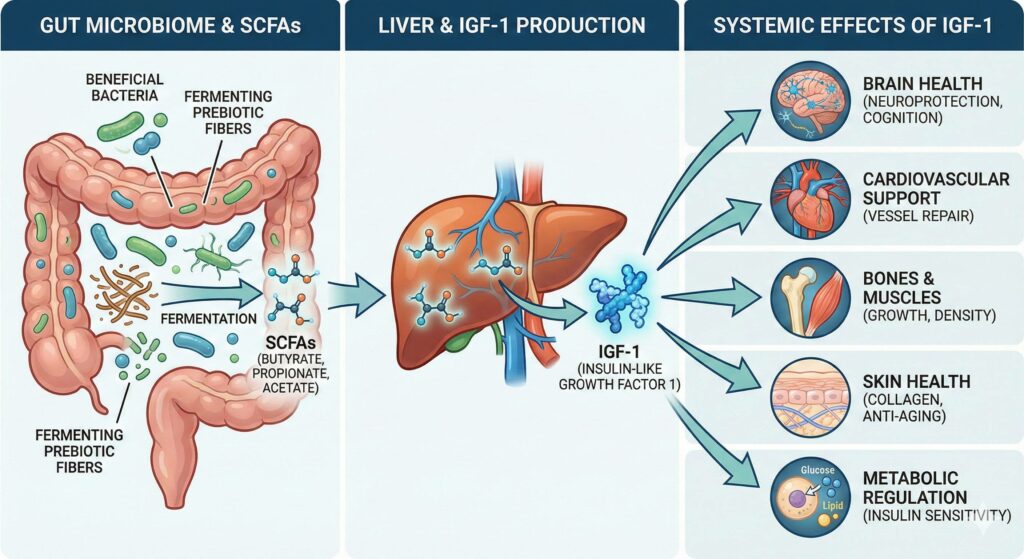
Insulin-like Growth Factor 1 (IGF-1) is a powerhouse hormone that serves as a primary mediator of growth hormone (GH) effects.1 While its role in building skeletal muscle and dense bone is well-known, its influence extends to nearly every system in the body, acting as a “master regenerator.”2
Recent research confirms a profound connection between the gut microbiome and the GH-IGF-1 axis, specifically through the production of Short-Chain Fatty Acids (SCFAs).3
Beyond Bones and Muscles: Other Roles of IGF-1
IGF-1 acts as a systemic growth factor that promotes cellular survival and repair.4 Here are its critical functions beyond the musculoskeletal system:
1. Neuroprotection and Cognitive Health
IGF-1 is one of the few hormones that can cross the blood-brain barrier. In the brain, it:
- Promotes Neurogenesis: Stimulates the birth of new neurons, particularly in the hippocampus (the area responsible for memory).
- Protects Against Neurodegeneration: Helps clear amyloid-beta plaques and supports the survival of existing neurons, potentially lowering the risk of conditions like Alzheimer’s.
- Improves Mood: Low levels of IGF-1 have been linked in several studies to increased rates of depression and anxiety.
2. Metabolic Regulation and Insulin Sensitivity
Despite its name, IGF-1 has “insulin-like” effects on blood sugar:5
- Glucose Uptake: It helps move glucose into cells for energy, which can improve overall insulin sensitivity.6
- Lipid Metabolism: It assists in the breakdown of fats and helps maintain a healthy balance of cholesterol.7
3. Cardiovascular Support
IGF-1 is vital for the health of the endothelium (the lining of the blood vessels). It:
- Promotes Vessel Repair: Stimulates the repair of damaged blood vessels.
- Anti-Inflammatory Effects: High-normal levels of IGF-1 are associated with lower systemic inflammation in the heart and arteries.
4. Skin Health and Anti-Aging
IGF-1 is a key driver of cellular turnover in the skin.8 It stimulates the production of collagen and keratin, which maintains skin elasticity and helps wounds heal faster.9 This is why it is often a focus in regenerative and “longevity” medicine.
How Gut Health and SCFAs Stimulate IGF-1
The “Gut-Liver Axis” is the primary pathway through which your microbiome influences your hormone levels. When you consume prebiotic fibers, beneficial bacteria ferment them into SCFAs – primarily Butyrate, Propionate, and Acetate.10
The Mechanism of Action
- Hepatic (Liver) Stimulation: Butyrate travels from the gut to the liver, where it acts as a signaling molecule.11 It has been shown to enhance the liver’s production of IGF-1 by activating specific receptors (like GPR109A) and inducing the release of IL-6, which triggers IGF-1 synthesis.12
- Epigenetic Modulation: SCFAs act as HDAC inhibitors (Histone Deacetylase inhibitors).13 This means they can “unlock” certain parts of your DNA, allowing your cells – particularly in the liver and bones – to express more IGF-1 genes.
- Growth Hormone Synergy: SCFAs can stimulate the pituitary gland to release more Growth Hormone, which then travels to the liver to trigger even more IGF-1 production.
- Microbial Colonization: Studies on “germ-free” mice show that without a healthy gut microbiome, IGF-1 levels are significantly lower, leading to stunted growth and poor bone density.14 Introducing beneficial bacteria quickly restores these hormone levels.15
Key Takeaway: By feeding your gut bacteria the right fibers to produce butyrate, you aren’t just helping your digestion; you are essentially signaling your liver to produce the “fountain of youth” hormone that repairs your brain, heart, and skin.16
Insulin-like Growth Factor 1 (IGF-1) serves as a systemic “master regenerator,” extending its influence far beyond muscle and bone density to include neuroprotection, enhanced insulin sensitivity, cardiovascular repair, and skin vitality. This vital hormone is significantly modulated by the gut-liver axis, where the fermentation of prebiotic fibers by beneficial bacteria produces Short-Chain Fatty Acids (SCFAs) like butyrate. These SCFAs act as signaling molecules and epigenetic regulators that stimulate the liver and pituitary gland to increase IGF-1 production, effectively linking a healthy microbiome to the body’s fundamental cellular repair and growth mechanisms.
Leave a Reply