
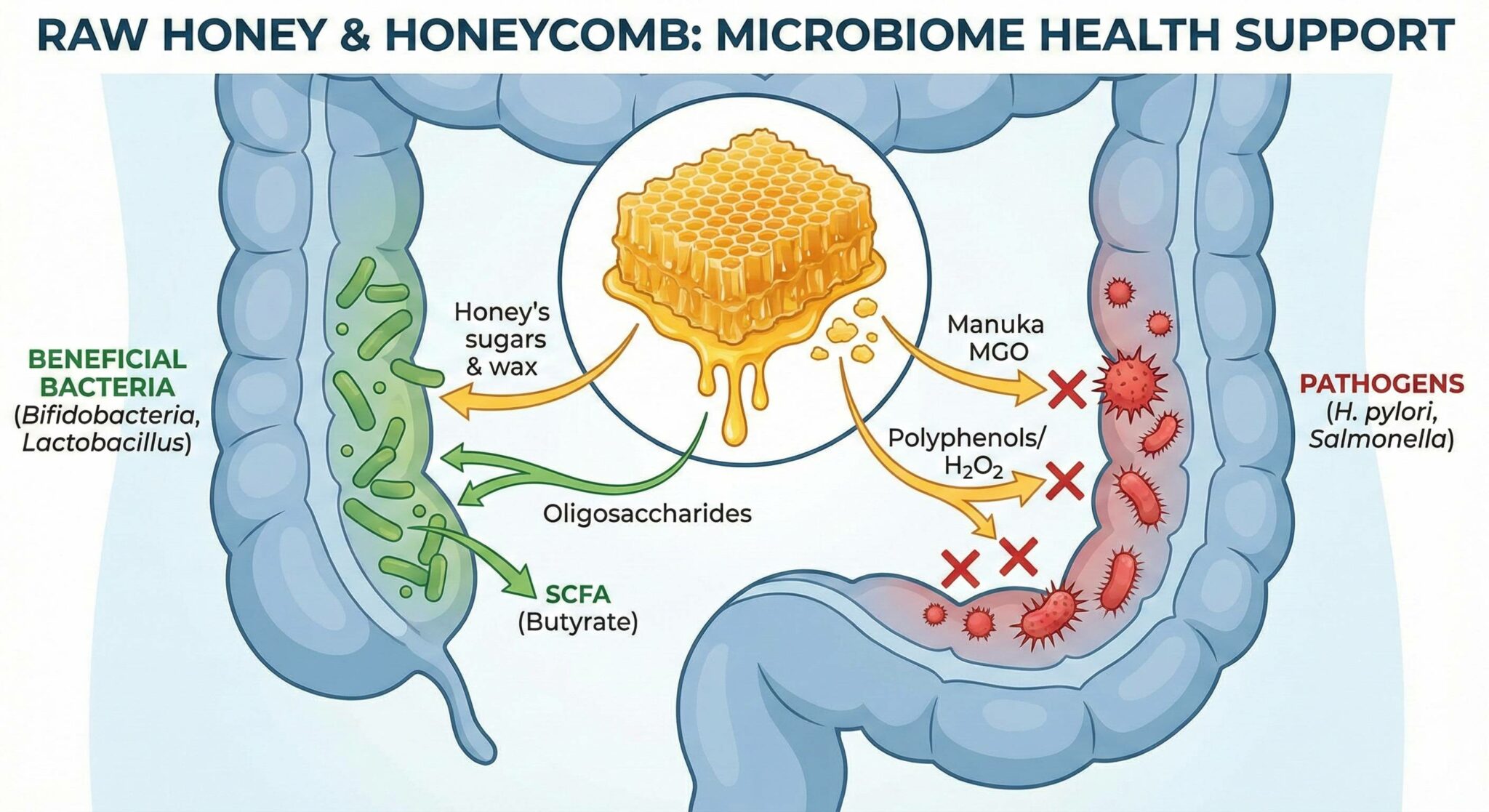
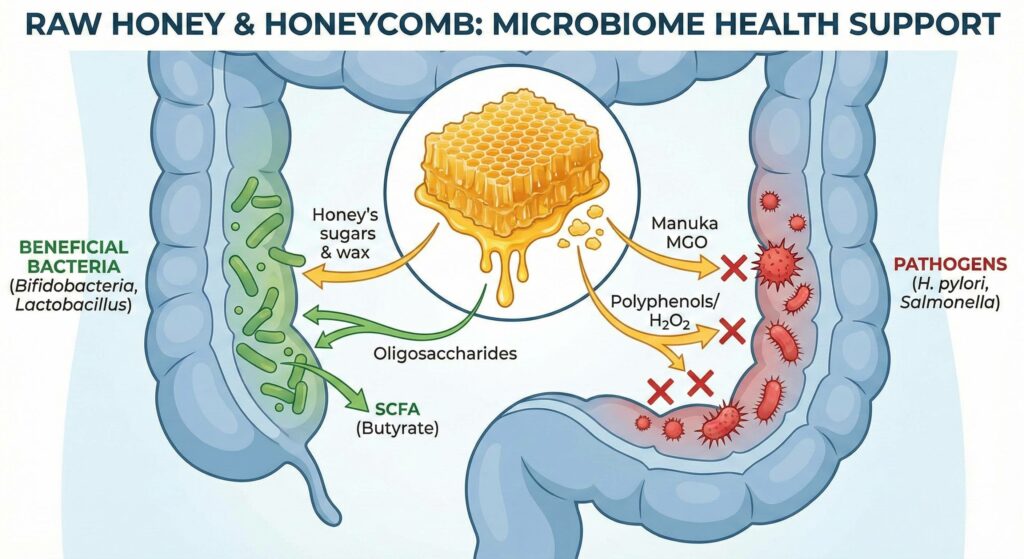
In general, pure honey uncut from the honeycomb does not cause gut dysbiosis; in fact, scientific evidence suggests it does the opposite. Rather than disrupting the microbiome, raw honey and honeycomb typically act as prebiotics, supporting the growth of beneficial bacteria while inhibiting pathogens.1
However, because honeycomb is a complex, raw food, there are specific biological interactions to consider regarding your gut health.
1. The Prebiotic Effect
Raw honey contains oligosaccharides, which are non-digestible carbohydrates.2 Because your body cannot break these down in the small intestine, they reach the colon where they serve as “fuel” for beneficial bacteria.3
- Bifidobacteria and Lactobacillus: Studies show that honey consumption increases the levels of these “good” bacteria.
- Short-Chain Fatty Acids (SCFAs): As these bacteria ferment the honey’s oligosaccharides, they produce SCFAs (like butyrate), which are essential for repairing the gut lining and reducing systemic inflammation.4
2. Selective Antimicrobial Action
Unlike broad-spectrum antibiotics, the antimicrobial properties of raw honey are “selective.”5 It tends to inhibit harmful pathogens while leaving beneficial flora intact.
- Hydrogen Peroxide & Low pH: These natural components create an environment that is hostile to pathogens like E. coli, Salmonella, and H. pylori.
- Polyphenols: Raw honey is rich in phenolic compounds that have been shown to break down “biofilms” – the protective shields that harmful bacteria build to resist treatment.
3. The Role of the Honeycomb (Wax, Pollen, & Propolis)
When you eat honey “uncut” from the comb, you are also consuming the beeswax, pollen, and propolis.6
- Beeswax: The wax is largely indigestible by humans.7 While it doesn’t cause dysbiosis, consuming large amounts can cause mild GI distress or bloating simply because it’s a “bulky” substance moving through the digestive tract.
- Propolis & Pollen: These contain additional antioxidants and enzymes that further support immune function within the gut.8
Potential Caveats
While honey is generally beneficial for the gut, there are two scenarios where it could be problematic:
- Excessive Sugar Intake: Honey is still primarily fructose and glucose.9 While it is a “better” sugar than refined corn syrup, a diet excessively high in any sugar can eventually feed opportunistic yeasts (like Candida) or certain bacteria, potentially contributing to an imbalance if consumed in very high volumes.
- Botulism Risk (Infants Only): Raw honey can contain Clostridium botulinum spores.10 While an adult’s mature gut microbiome easily prevents these spores from growing, the underdeveloped gut of an infant (under 1 year old) cannot, leading to infant botulism.11
Summary Table
| Component | Effect on Gut |
| Oligosaccharides | Prebiotic: Feeds Bifidobacteria and Lactobacillus. |
| Polyphenols | Antimicrobial: Inhibits pathogens and reduces inflammation. |
| Beeswax | Neutral/Inert: May cause minor bloating if eaten in excess; otherwise passes through. |
| Enzymes | Digestive Aid: Helps break down starches and other nutrients. |
What Is The Difference Between Honey Found at The Health Food Store?
Manuka Vs. Local Wildflower
While all raw honey provides prebiotic benefits, Manuka honey and Wildflower honey interact with your gut microbiome in distinct ways due to their unique chemical “blueprints.”
1. Manuka Honey: The “Precision” Antimicrobial
Manuka honey is unique because it contains high levels of Methylglyoxal (MGO), a compound that provides “non-peroxide” antibacterial activity.
- Selective Pathogen Inhibition: Manuka is particularly effective at inhibiting specific harmful bacteria like H. pylori (linked to ulcers) and C. difficile without harming beneficial Bifidobacteria or Lactobacilli.
- The MGO Factor: While most honeys rely on hydrogen peroxide for antibacterial action (which can be neutralized by enzymes in the body), MGO remains active, making Manuka more “potent” for targeted gut issues like SIBO (Small Intestinal Bacterial Overgrowth) or reflux.
- Prebiotic Strength: It contains high concentrations of complex oligosaccharides that specifically fuel the production of butyrate, a Short-Chain Fatty Acid (SCFA) vital for maintaining the gut barrier (the “leaky gut” defense).
2. Wildflower Honey: The Diverse Prebiotic
Wildflower honey is “polyfloral,” meaning the bees collect nectar from a vast array of plants. This variety results in a broader spectrum of bioactives.
- Diverse Oligosaccharide Profile: Because it comes from many different flowers, wildflower honey often contains a wider variety of prebiotic fibers. This “broad-spectrum” feeding can promote a more diverse microbiome, which is a hallmark of a healthy gut.
- Antioxidant Power: Depending on the region, dark wildflower honeys (like Buckwheat or those from forest blossoms) often have higher antioxidant levels than Manuka. These antioxidants reduce oxidative stress in the gut lining.
- Local Benefits: Local wildflower honey contains trace amounts of local pollen, which some researchers believe may help “prime” the gut-associated lymphoid tissue (GALT), potentially helping with seasonal sensitivities.
Comparison at a Glance
| Feature | Manuka Honey (High UMF/MGO) | Wildflower Honey (Raw/Uncut) |
| Primary Active | Methylglyoxal (MGO) | Hydrogen Peroxide & Phenolics |
| Microbiome Impact | Targeted (inhibits specific pathogens) | Broad (supports general diversity) |
| Prebiotic Type | Specific oligosaccharides | Varied oligosaccharides |
| Best For… | Ulcers, SIBO, and acute gut inflammation | Daily maintenance and microbial diversity |
| SCFA Production | High Butyrate stimulation | General SCFA support |
How to Choose for Gut Health
- For “Repair” Mode: If you are dealing with a specific bacterial imbalance (like an overgrowth of bad bacteria), Manuka (UMF 10+ or higher) is often superior because of its medicinal-grade antimicrobial properties.
- For “Maintenance” Mode: For daily gut health and to keep your “good” bacteria well-fed, a high-quality, dark Wildflower honey (still in the comb) is excellent and typically more cost-effective.
A Note on SCFAs: Since you have a professional interest in Short-Chain Fatty Acids, it’s worth noting that the fermentation of honey’s sugars by Bifidobacteria specifically tends to favor the production of propionate and butyrate, which are the primary fuels for your colonocytes and play a major role in the gut-brain axis.
Honeycomb and the Microbiome Summary:
Pure, uncut honey from the comb acts as a natural prebiotic rather than a catalyst for dysbiosis, selectively nourishing beneficial strains like Bifidobacteria and Lactobacillus while simultaneously inhibiting harmful pathogens. By delivering a complex matrix of oligosaccharides, polyphenols, and beeswax, honeycomb provides the raw materials necessary for the gut microbiota to produce Short-Chain Fatty Acids (SCFAs), particularly butyrate, which is essential for maintaining the gut barrier and supporting the gut-brain axis. While Manuka honey offers high-potency, targeted antimicrobial action through Methylglyoxal (MGO) to address specific overgrowths, raw Wildflower honey promotes broader microbial diversity due to its varied floral origins. Together, these components work synergistically to suppress “bad” bacteria without the collateral damage often associated with synthetic antimicrobials, making honeycomb a powerful tool for digestive resilience.
Leave a Reply