

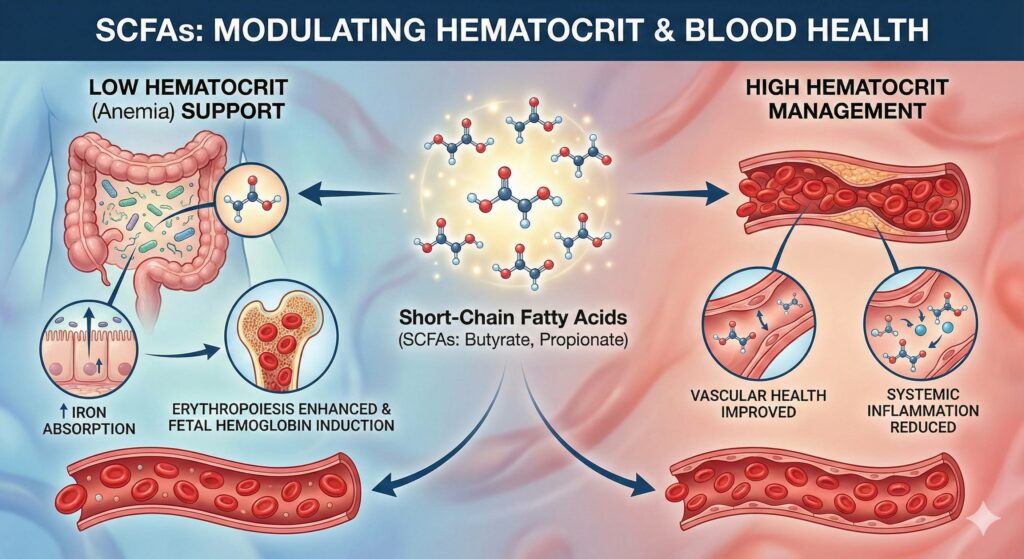
Short-chain fatty acids (SCFAs), particularly butyrate and propionate, play a complex and significant role in blood health.1 While they aren’t a direct “on/off switch” for hematocrit, they influence the production and regulation of red blood cells (RBCs) through several biological pathways.
How SCFAs Impact Hematocrit Levels
Hematocrit is the percentage of your blood volume made up of red blood cells. SCFAs can influence this number by affecting erythropoiesis (the production of new red blood cells) and iron availability.
1. Supporting Low Hematocrit (Anemia)
If your hematocrit is low, SCFAs can help in two primary ways:
- Enhanced Iron Absorption: SCFAs like butyrate lower the pH in the colon, which makes minerals like iron more soluble and easier for your body to absorb.
- Fetal Hemoglobin Induction: Research shows that certain SCFA derivatives (specifically butyrate) can stimulate the production of fetal hemoglobin.2 This is often used in medical treatments for blood disorders like sickle cell anemia to improve the quality and count of functional red blood cells.3
- Reducing Inflammation-Driven Anemia: Chronic inflammation often suppresses red blood cell production (anemia of chronic disease). SCFAs are potent anti-inflammatories; by reducing systemic inflammation, they can “unlock” the body’s ability to produce more RBCs.
2. Managing High Hematocrit (Polycythemia)
The relationship here is more indirect. High hematocrit often stems from dehydration, sleep apnea, or smoking, but it can also be linked to metabolic issues.
- Blood Viscosity and Cardiovascular Health: High hematocrit makes blood thicker (more viscous). SCFAs have been shown to improve vascular health and reduce blood pressure.4 While they don’t necessarily “lower” the cell count directly in healthy individuals, they may help mitigate the cardiovascular risks associated with “thick” blood.
- Metabolic Regulation: SCFAs help regulate glucose and lipid metabolism.5 In cases where high hematocrit is a secondary effect of metabolic syndrome or obesity-related respiratory issues, the systemic benefits of SCFAs may help the body return to a state of homeostasis.
The “Butyrate Paradox” in Blood Cells
Interestingly, while butyrate can stimulate the growth of healthy red blood cell precursors, it can also inhibit the growth of abnormal or “transformed” cells. This dual role helps ensure that the blood cells being produced are healthy and functional.
Summary Table: SCFAs and Blood Health
| Condition | Primary SCFA Action | Potential Result |
| Low Hematocrit | Increases iron absorption & stimulates hemoglobin genes. | Higher RBC production; improved oxygen carrying. |
| High Hematocrit | Improves blood vessel health & reduces inflammation. | Reduced cardiovascular strain; better blood flow. |
| Systemic Health | Lowers systemic inflammation (IL-6, TNF-α). | Protects against anemia of chronic disease. |
Short-chain fatty acids (SCFAs), particularly butyrate, play a regulatory role in blood health by influencing red blood cell production and systemic homeostasis. For individuals with low hematocrit, SCFAs can assist by lowering colonic pH to enhance iron absorption and stimulating specific genes involved in hemoglobin production. Conversely, while they do not directly “thin” the blood in cases of high hematocrit, SCFAs help mitigate associated cardiovascular risks by improving vascular function, reducing systemic inflammation, and supporting metabolic health. Ultimately, SCFAs act as biological modulators that help maintain a balanced environment for healthy blood cell development and circulation.
Leave a Reply