

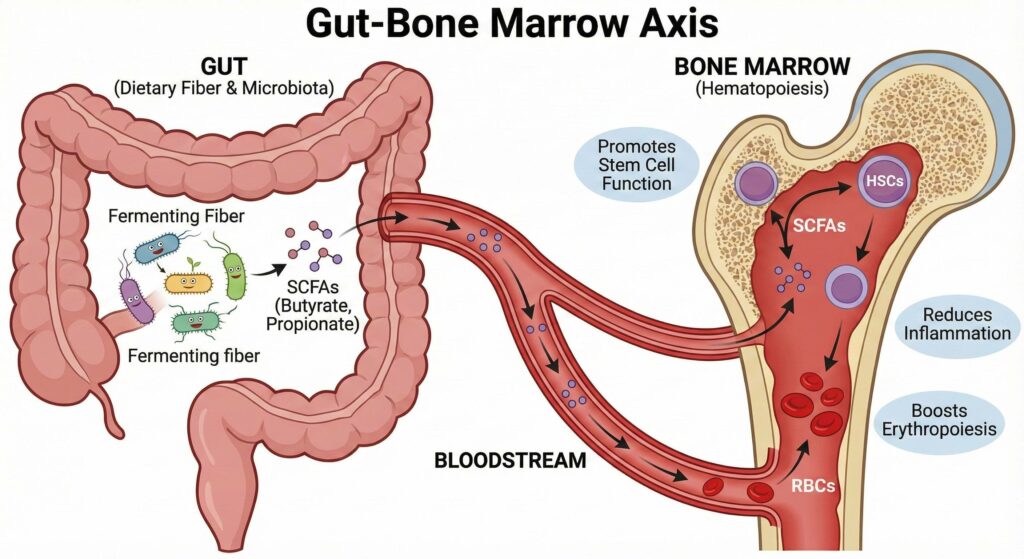
Research indicates that Short-Chain Fatty Acids (SCFAs) – particularly butyrate and propionate – play a significant, supportive role in bone marrow function and red blood cell formation.
While most evidence comes from pre-clinical studies (animal and cell models), the “Gut-Bone Marrow Axis” is a rapidly growing field of science showing that your gut health directly influences your blood and bone health.
1. How SCFAs Support Bone Marrow
Your bone marrow is the factory where all blood cells (red, white, and platelets) are made. SCFAs help “manage” this factory through several mechanisms:
- Fueling Stem Cells: Bone marrow contains Hematopoietic Stem Cells (HSCs), the “master cells” that turn into blood. Research suggests SCFAs can diffuse from the gut into the bloodstream, reaching the bone marrow to act as a metabolic fuel source and signaling molecule for these stem cells.
- Calming Inflammation: Chronic inflammation can damage bone marrow and suppress healthy blood cell production (a condition often seen in aging or chronic disease). Butyrate is a known anti-inflammatory; by reducing systemic inflammation, it creates a safer environment for bone marrow to function efficiently.
- Modulating Immune Cells: Propionate has been shown to influence the development of specific immune cells (like dendritic cells and macrophages) right inside the bone marrow, preparing them before they even enter the bloodstream to fight infection.
2. Impact on Red Blood Cells (Erythropoiesis)
The process of making red blood cells is called erythropoiesis. SCFAs appear to influence this process in unique ways:
- Boosting EPO Production: Some studies indicate that butyrate can stimulate the production of Erythropoietin (EPO). EPO is the primary hormone that tells your bone marrow to “make more red blood cells.”
- Fetal Hemoglobin Switching: Interestingly, butyrate and propionate are researched for their ability to reactive “fetal hemoglobin” genes. This is significant for conditions like sickle cell anemia, but it also demonstrates that these fatty acids have a direct genetic impact on how red blood cells are built.
- Protecting Young Cells: Emerging research suggests certain SCFA derivatives may help prevent the early death (apoptosis) of young red blood cells, effectively ensuring more of them survive to maturity.
3. The “Testosterone Propionate” Confusion
Important Note: You may see research mentioning “Testosterone Propionate” strengthening bone marrow. This is not the same as the SCFA propionate.
- Propionate (SCFA): A natural byproduct of fiber fermentation in your gut.
- Testosterone Propionate: A synthetic steroid hormone ester.
- Make sure you are looking at nutritional data for the SCFA, not the steroid.
Summary Table: Key SCFAs for Blood & Bone
| SCFA | Primary Benefit to Marrow/Blood |
| Butyrate | Anti-inflammatory protection for marrow; stimulates EPO; alters gene expression for hemoglobin. |
| Propionate | Influences immune cell creation (white blood cells); supports red blood cell gene expression. |
| Acetate | Generally acts as a fuel source for various tissues, indirectly supporting marrow metabolism. |
Does this mean you should take supplements?
While “sodium butyrate” supplements exist, the most effective way to strengthen this system is likely through prebiotic fiber. When you eat resistant starches (like Inulin or Acacia Fiber or cooled potatoes, green bananas) or soluble fiber (oats, apples), your gut bacteria produce these SCFAs continuously and in the correct ratios.
Leave a Reply