

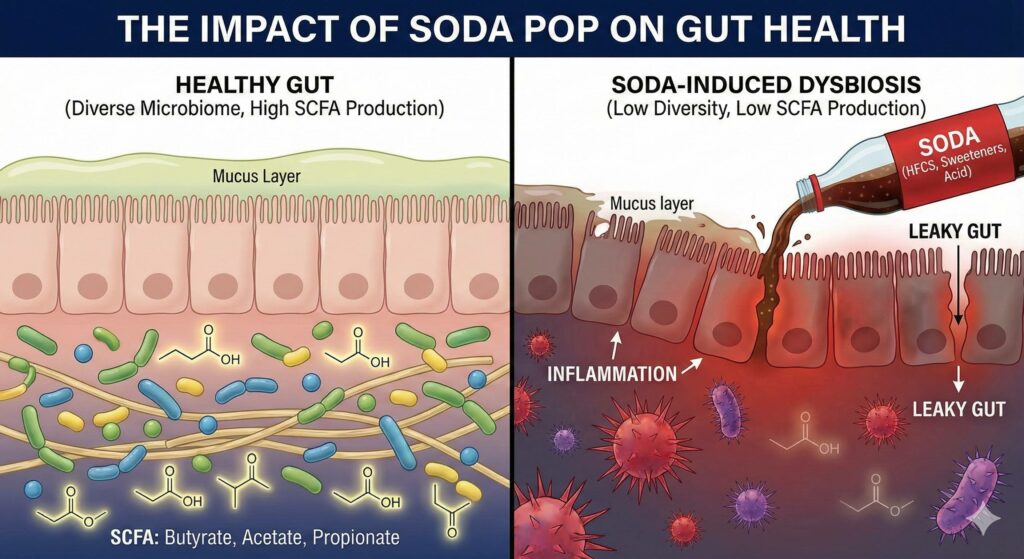
Yes, current research indicates that soda pop products – both regular (sugar-sweetened) and diet (artificially sweetened) – can contribute to gut dysbiosis and significantly lower the production of Short-Chain Fatty Acids (SCFAs).
The mechanisms differ slightly depending on whether the soda contains high-fructose corn syrup (HFCS) or artificial sweeteners, but the end result is often a reduction in the beneficial bacteria responsible for producing SCFAs like butyrate, acetate, and propionate.
Here is a breakdown of how soda impacts your gut microbiome and SCFA levels.
1. The Impact of Regular Soda (Sugar & HFCS)
Regular sodas typically contain high concentrations of sucrose or High-Fructose Corn Syrup (HFCS). These simple sugars are absorbed quickly in the small intestine, but when consumed in excess (as in soda), they can spill over into the colon, causing significant disruption.
- Feeding the “Wrong” Bacteria: Simple sugars feed potentially pathogenic bacteria (such as Proteobacteria and Enterobacteriaceae) and yeasts (like Candida). These organisms proliferate rapidly (“bloom”), outcompeting the slow-growing, beneficial bacteria.
- Starving the Good Bacteria: Beneficial gut bacteria (like Ruminococcaceae and Lachnospiraceae) thrive on dietary fiber, not simple sugar. Because soda provides zero fiber and displaces nutrient-dense foods, these populations starve and shrink.
- The SCFA Drop: Since these fiber-loving bacteria are the primary producers of SCFAs, their decline leads to a direct drop in SCFA production.
2. The Impact of Diet Soda (Artificial Sweeteners)
Diet sodas use non-nutritive sweeteners (NNS) like sucralose, aspartame, and saccharin. While they have no calories, they are biologically active in the gut.
- Bacteriostatic Effects: Research indicates that some artificial sweeteners (particularly sucralose and saccharin) can be toxic to certain beneficial gut bacteria, effectively inhibiting their growth.
- Altered Diversity: Studies have shown that NNS consumption can reduce overall microbial diversity. A less diverse microbiome is less resilient and less capable of producing adequate SCFAs.
- Glucose Intolerance: Paradoxically, the dysbiosis caused by artificial sweeteners has been linked to inducing glucose intolerance in the host, mediated entirely by the altered gut bacteria.
3. The Role of Phosphoric Acid
Most dark colas contain phosphoric acid to add tanginess and prevent spoilage.
- pH Alteration: Phosphoric acid is highly acidic. While the stomach is designed for acid, chronic exposure to high amounts of dietary acid can slightly alter the pH downstream in the digestive tract, creating an environment that favors acid-tolerant bacteria (often less beneficial) over SCFA-producers.
Summary of Bacterial Shifts
The following table summarizes the specific shifts in gut bacteria often seen with chronic soda consumption:
| Factor | Bacteria Increased (The “Bad”) | Bacteria Decreased (The “Good”) | Result |
| Sugar / HFCS | Proteobacteria, Clostridium bolteae, E. coli | Bacteroidetes, Lachnospiraceae | Inflammation, gut permeability (“leaky gut”). |
| Artificial Sweeteners | Enterobacteriaceae, Bacteroides spp. | Akkermansia, Ruminococcaceae | Reduced mucus layer protection, metabolic confusion. |
| SCFA Impact | N/A | Butyrate Producers | Lower SCFA production, leading to higher inflammation. |
Why Lower SCFAs Matter
When soda consumption drives down SCFA production, you lose the primary fuel source for your colon cells (colonocytes). This can lead to:
- Leaky Gut: Without butyrate, the tight junctions between intestinal cells weaken, allowing toxins to enter the bloodstream.
- Inflammation: SCFAs are potent anti-inflammatory agents. Lower levels mean higher systemic inflammation.
- Poor Blood Sugar Control: SCFAs help regulate insulin sensitivity. Losing them makes blood sugar management harder, creating a vicious cycle.
Research indicates that consumption of both regular and diet soda significantly contributes to gut dysbiosis and a reduction in beneficial Short-Chain Fatty Acids (SCFAs). Regular sodas high in sugar or high-fructose corn syrup fuel the overgrowth of pathogenic bacteria while starving beneficial fiber-fermenting strains, whereas artificial sweeteners in diet sodas can toxically inhibit helpful flora and reduce overall microbial diversity. This disruption, compounded by the pH-altering effects of phosphoric acid, depletes essential SCFAs like butyrate, ultimately compromising the gut barrier and increasing the risk of systemic inflammation and metabolic dysfunction.
Leave a Reply