

Dealing with a herniated (or “blown”) disc can be incredibly intense, especially when the pain radiates or causes weakness. The good news is that the body has a remarkable, natural mechanism for healing these injuries – often without the need for surgery.
When a disc herniates, the soft inner material (the nucleus pulposus) pushes through a tear in the tough outer layer. While this causes immediate pain and inflammation, the body doesn’t just leave it there.
How the Body Heals a Rupture
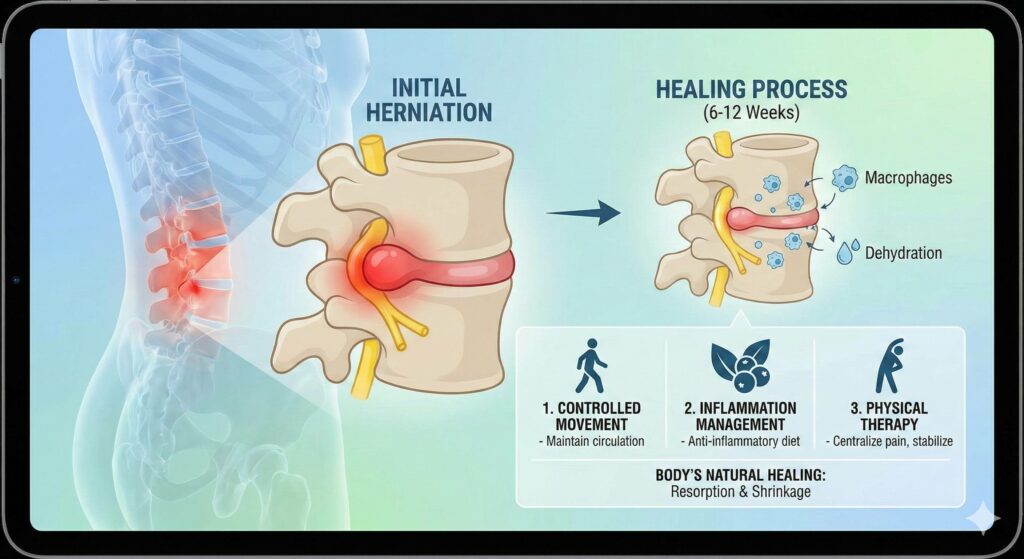
The primary way the body “heals” a herniation is through a process called resorption.
- Immune Response: The body perceives the displaced disc material as a foreign object. This triggers an immune response where macrophages (white blood cells) essentially “eat” and break down the protruding material.
- Dehydration: The inner disc material is mostly water. Once it is outside the disc, it naturally begins to dehydrate and shrink, which reduces the pressure on the surrounding nerves.
Steps to Support the Healing Process
While the body does the heavy lifting, certain actions can optimize the environment for recovery:
1. Controlled Movement (The “Sweet Spot”)
Total bed rest is actually discouraged by most modern spine specialists. It can lead to stiffness and muscle atrophy.
- Gentle Activity: Walking or very light movement helps maintain circulation, which is vital for delivering nutrients to the area.
- Avoid Triggers: Steer clear of “BLT” – bending, lifting, and twisting – which can put mechanical stress on the healing tear.
2. Inflammation Management
High levels of systemic inflammation can make the nerves more sensitive to the pressure of the disc.
- Anti-inflammatory Diet: Focusing on foods that lower systemic inflammation can help.
- The SCFA Connection: Interestingly, short-chain fatty acids like butyrate play a role in regulating the body’s inflammatory response. Maintaining a healthy gut-spine axis may theoretically support a more efficient immune response during the resorption phase.
3. Physical Therapy (PT)
A therapist can help you find “directional preference” – specific movements that help centralize the pain (moving it from the arm/leg back toward the spine). They also focus on strengthening the “internal corset” of muscles that stabilize the vertebrae.
4. Hydration
Since the disc material needs to dehydrate to shrink, but the remaining healthy part of the disc needs water to stay flexible, staying well-hydrated is crucial for overall spinal health.
A Note on Progress
Healing typically takes time – often 6 to 12 weeks for significant resorption to occur. If you notice “red flag” symptoms like a sudden loss of bowel/bladder control or rapidly worsening muscle weakness, those are signs that the body needs immediate medical intervention rather than conservative care.
The body naturally repairs a herniated disc primarily through resorption, a biological process where the immune system identifies the displaced disc material as a foreign object and uses macrophages to break it down, while the protruding nucleus simultaneously dehydrates and shrinks to relieve pressure on surrounding nerves. This recovery typically spans six to twelve weeks and can be optimized by avoiding complete bed rest in favor of gentle, controlled movement and targeted physical therapy to centralize pain and stabilize the spine. By managing systemic inflammation through nutrition and maintaining proper hydration, individuals can create an ideal environment for the body to heal the rupture, often making invasive surgical intervention unnecessary.
Leave a Reply