
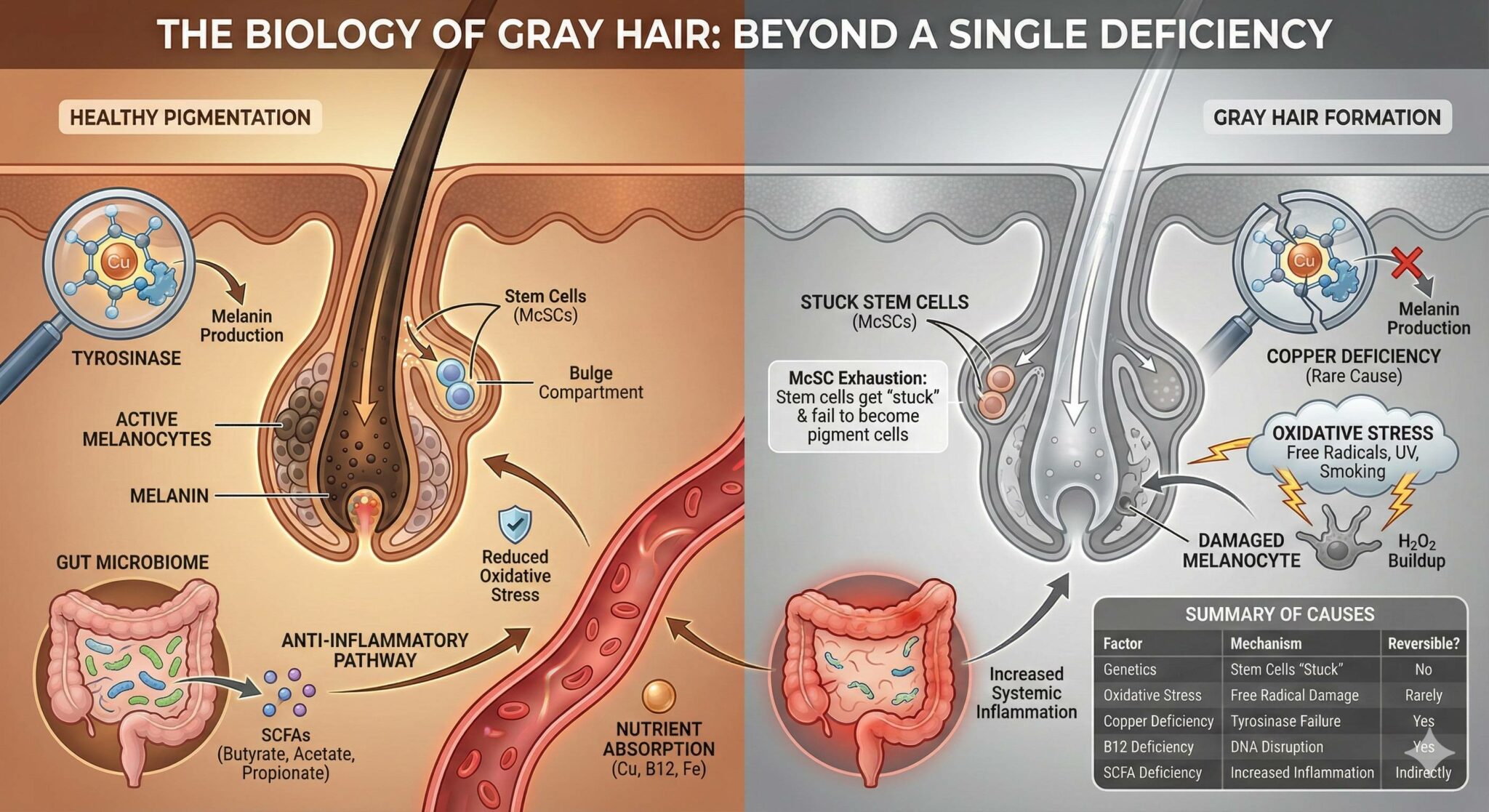
Aging hair is rarely caused by a single deficiency. While mineral shortages can play a role, the primary cause is now understood to be a specific type of stem cell failure.
Here is a breakdown of the biological mechanisms behind grey hair, addressing the questions about minerals and Short-Chain Fatty Acids (SCFAs).
1. Is it a lack of minerals?
Sometimes, but not usually.
Certain mineral and vitamin deficiencies can cause premature greying, and in these specific cases, the greying is sometimes reversible. However, for most people, mineral levels are normal, and the greying is genetic.
- Copper: This is the most critical mineral for hair color. An enzyme called tyrosinase requires copper to produce melanin (pigment). If you are severely copper deficient, your hair cannot produce color.
- Iron & Vitamin B12: Anemia and B12 deficiency have historically been linked to premature greying (silver hair in people under 20-30).
- Zinc: Zinc deficiency can weaken the hair shaft, but it is less directly linked to pigment loss than copper.
2. Is it a lack of SCFAs?
Indirectly, yes.
There is no evidence that a direct “lack of SCFAs” turns hair white. However, looking into SCFAs is on the right track regarding the Gut-Skin Axis.
- Systemic Inflammation: SCFAs (like butyrate) are potent anti-inflammatories. Chronic inflammation (oxidative stress) damages the melanocytes (pigment cells) in your hair follicles. If your gut is not producing enough SCFAs, systemic inflammation may rise, accelerating the aging of these cells.
- Nutrient Absorption: A healthy gut microbiome (rich in SCFAs) ensures you actually absorb the copper and B vitamins needed for pigmentation.
3. The Real Cause: “Stuck” Stem Cells
The most up-to-date science (as of recent major studies, notably from NYU Langone Health) suggests the main cause is Melanocyte Stem Cell (McSC) Exhaustion.
- How it works: Your hair follicles contain stem cells that are supposed to move back and forth between two compartments in the follicle. As they move, they mature into pigment-producing cells to color new hair.
- The Jam: As we age, these stem cells get “stuck” in one compartment (the hair follicle bulge). Because they are stranded there, they fail to receive the signal to mature into melanocytes.
- The Result: The hair grows, but without the pigment cells to “paint” it, it grows out white.
Summary Table: Causes of Grey Hair
| Factor | Mechanism | Reversible? |
| Genetics | Determines when your stem cells get “stuck” | No |
| Oxidative Stress | Free radicals attack pigment cells (smoking, UV, stress) | Rarely |
| Copper Deficiency | Tyrosinase enzyme fails to make melanin | Yes |
| Vitamin B12 Deficiency | Disrupts DNA production in hair cells | Yes |
| SCFA Deficiency | Increases inflammation; reduces nutrient absorption | Indirectly |
What can you do?
Since you cannot change your genetics, the goal is to protect the pigment cells you still have.
- Check Copper & B12: A blood test can rule out simple deficiencies.
- Support SCFA Production: While not a “cure,” increasing fiber intake (prebiotics) to boost butyrate production helps lower the systemic oxidative stress that damages hair follicles.
- Antioxidants: Foods high in antioxidants help neutralize the free radicals that bleach hair from the inside out (hydrogen peroxide buildup in the follicle is a known mechanism of greying).
While mineral deficiencies, specifically in copper (requisite for the tyrosinase enzyme) and Vitamin B12, can occasionally cause reversible premature greying, the primary biological cause of aging grey hair is now understood to be Melanocyte Stem Cell (McSC) exhaustion. As individuals age, these stem cells often get “stuck” within the hair follicle bulge, failing to mature into the melanocytes needed to produce pigment for new hair growth. Short-Chain Fatty Acids (SCFAs) do not directly influence hair color, but they play a crucial indirect role through the gut-skin axis by reducing systemic inflammation (oxidative stress) that damages pigment cells and ensuring proper absorption of essential nutrients. Therefore, aging grey hair is a complex process driven primarily by genetics and stem cell dysfunction, rather than a simple lack of minerals or gut metabolites, though maintaining gut health and antioxidant levels can help protect existing pigment cells.
Leave a Reply