

Managing hematocrit levels is a common hurdle for men on Testosterone Replacement Therapy (TRT). While TRT provides numerous benefits, it often acts as a potent signal for erythropoiesis – the production of red blood cells. When hematocrit levels climb too high (secondary polycythemia), blood viscosity increases, which can put extra strain on the cardiovascular system.
The standard medical “fix” is usually a referral for therapeutic phlebotomy (donating blood). However, many find themselves stuck in a “donation cycle” where frequent blood draws crash their ferritin (stored iron) levels, leading to fatigue and “brain fog” despite having high testosterone.
Fortunately, by understanding the body’s internal “iron thermostat,” you can often manage these levels naturally.
The Hepcidin Mechanism: The Body’s Iron Brake
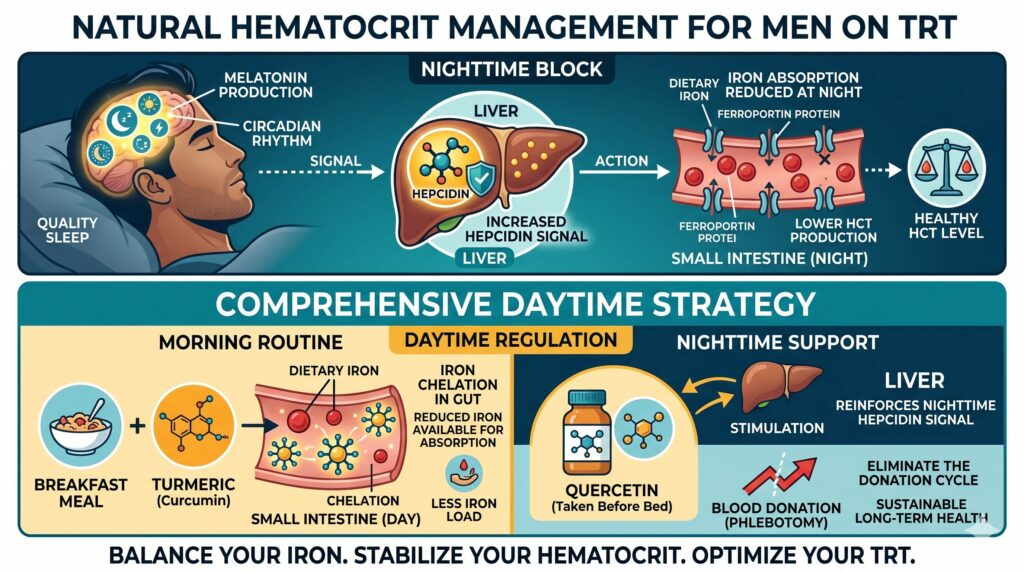
The key to controlling hematocrit without needles lies in hepcidin, a hormone produced by the liver. Hepcidin is the master regulator of iron absorption. It works by binding to and degrading ferroportin, the only known protein that allows iron to exit cells and enter the bloodstream.
- High Hepcidin: Iron is “locked” inside cells and not absorbed from the gut.
- Low Hepcidin: Iron flows freely into the blood, fueling the production of more red blood cells and raising hematocrit.
The Sleep-Melatonin Connection
Our bodies are designed to regulate iron on a circadian rhythm. During deep sleep, the pineal gland produces melatonin. Beyond its role in sleep, melatonin serves as a signaling molecule that encourages the liver to increase hepcidin production.
This natural spike in hepcidin at night ensures that iron absorption is minimized while you sleep. If sleep is poor or disrupted, this signal weakens, hepcidin stays low, and the body remains in a “high-absorption” state, which can contribute to rising hematocrit levels over time.
Natural Strategies to Stimulate Hepcidin and Chelate Iron
To break the cycle of blood donations, you can use targeted nutritional interventions to mimic the body’s natural iron-blocking signals.
1. Quercetin at Night
Quercetin is a potent antioxidant and flavonoid that has been shown in various studies to modulate iron metabolism. Specifically, taking Quercetin before bed can help stimulate the expression of hepcidin. By boosting the “nighttime signal,” you effectively keep the “iron gates” closed, preventing the excess raw material from fueling runaway red blood cell production.
2. Turmeric (Curcumin) in the Morning
While Quercetin works on the signaling side, Turmeric (specifically its active compound, curcumin) works on the physical side through chelation. Curcumin is a known iron chelator; it binds to ferric iron in the digestive tract, preventing it from being absorbed in the first place.
- Strategy: Take Turmeric/Curcumin with your morning meal.
- Effect: It “captures” the iron from your breakfast, ensuring it never enters the bloodstream. This reduces the total “iron load” available for the bone marrow to use for erythropoiesis.
The Big Picture: Managing the “Iron Load”
By combining these methods, you address the issue from two angles:
- Reduced Supply: Turmeric binds iron in the gut during the day.
- Increased Regulation: Quercetin and Melatonin (from good sleep) signal the liver to block iron transport at night.
When the body has less available iron and a stronger signal to keep it “locked up,” hematocrit levels typically stabilize. This allows men on TRT to maintain healthy blood viscosity and optimal cardiovascular health without the “crash and burn” cycle of frequent blood donations.
Note: It is always wise to monitor both Hematocrit and Ferritin levels through regular blood work to ensure you are maintaining a healthy balance. Balancing these levels naturally isn’t just about avoiding a needle; it’s about optimizing the internal environment for long-term health.
Men on Testosterone Replacement Therapy often face elevated hematocrit levels due to increased red blood cell production, a condition traditionally managed through frequent blood donations. However, while phlebotomy lowers blood viscosity, it frequently depletes ferritin stores, leading to a cycle of fatigue and iron deficiency. A more sustainable alternative involves leveraging the body’s “iron brake,” a liver hormone called hepcidin. By regulating hepcidin, the body can naturally limit iron absorption and transport, thereby slowing the production of new red blood cells and stabilizing hematocrit without the need for medical intervention or the subsequent crash in energy levels.
The body’s internal clock plays a vital role in this process, as deep sleep triggers melatonin production, which in turn signals the liver to increase hepcidin levels and block nighttime iron absorption. This natural rhythm can be amplified by using targeted supplements: taking quercetin before bed helps stimulate hepcidin expression, reinforcing the nighttime “iron gate,” while taking turmeric with breakfast acts as a physical chelator to bind iron in the gut. Together, these strategies reduce the total iron load available for red blood cell synthesis, offering a comprehensive, natural approach to maintaining healthy blood thickness and long-term cardiovascular health.
Leave a Reply