

Can restoring methylation levels improve skin health? 
The relationship between methylation and skin aging is a burgeoning area of epigenetic research. In short, yes, under-methylation (hypomethylation) is a significant factor in the cellular aging process that leads to wrinkles and loss of skin elasticity.
Here is how the biochemistry of methylation impacts skin quality and why optimizing it can help.
1. The Epigenetic Clock and DNA Repair
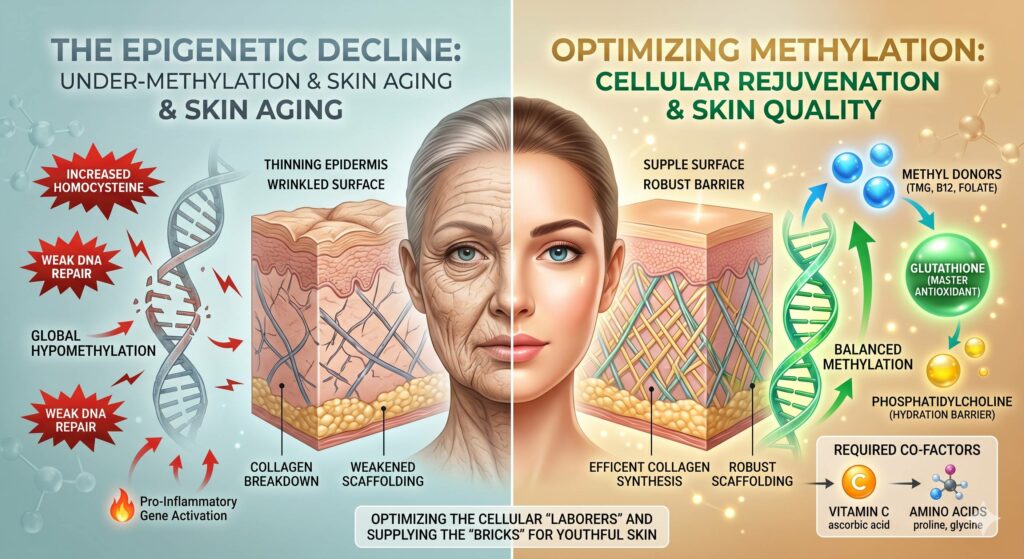
As we age, our DNA undergoes global hypomethylation. Think of methylation as the “software” that tells your skin cells how to function. When methylation is “under-active”:
- Gene Expression: Genes that promote inflammation and collagen breakdown (which are normally “silenced”) may become active.
- DNA Repair: Methylation is essential for repairing DNA damage caused by UV radiation. If repair mechanisms are sluggish, skin cells accumulate damage faster, leading to the thinning and “creping” seen in older individuals.
2. The Homocysteine Connection
When the methylation cycle is inefficient, levels of homocysteine tend to rise. High homocysteine is not just a cardiovascular concern; it is detrimental to the skin’s structural integrity:
- Collagen & Elastin: Homocysteine interferes with the cross-linking of collagen and elastin fibers. This weakens the “scaffolding” of the skin, leading to sagging and deep wrinkles.
- Oxidative Stress: High homocysteine promotes the production of reactive oxygen species (ROS), which accelerate the degradation of the extracellular matrix in the dermis.
3. Phospholipid Synthesis and Hydration
Methylation is required for the synthesis of phosphatidylcholine, a major component of cell membranes.
- Barrier Function: Healthy cell membranes are crucial for maintaining the skin’s moisture barrier.
- The Result: Efficient methylation helps the skin retain lipid content, preventing the dry, “papery” texture often associated with under-methylation and aging.
Can Boosting Methylation Help?
Optimizing methylation can support skin quality, though it is more of a “maintenance and prevention” strategy than an instant filler. Here is how “boosting” the cycle helps:
- Supporting the Cycle: Utilizing methyl donors – such as trimethylglycine (TMG), methylcobalamin (B12), and methylfolate – helps lower homocysteine levels, thereby protecting existing collagen.
- Glutathione Production: The methylation cycle feeds into the transsulfuration pathway, which produces glutathione, the body’s master antioxidant. Higher glutathione levels protect skin cells from environmental aging (pollution and sun).
- Cell Turnover: Proper methylation supports faster cellular replication, meaning the skin can replace damaged surface cells with healthy new ones more efficiently.
A Balanced View
While methylation is a heavy hitter for “internal” aging, skin quality is also heavily influenced by external factors. To see a true change in skin quality, methylation support should be paired with:
- Vitamin C: A necessary co-factor for actual collagen synthesis.
- Amino Acids: Providing the “bricks” (glycine, proline) while methylation provides the “laborers.”
- UV Protection: Preventing the damage that the methylation cycle would otherwise have to spend all its energy repairing.
DNA methylation acts as the cellular “operating system” for skin health, and its decline—a process known as global hypomethylation—is a primary driver of the physical signs of aging. When this cycle is under-active, the body struggles to silence pro-inflammatory genes and repair UV-induced DNA damage, leading to a breakdown in structural integrity. Furthermore, poor methylation often leads to an accumulation of homocysteine, which directly interferes with the cross-linking of collagen and elastin fibers. This effectively weakens the skin’s internal scaffolding, resulting in the thinning, sagging, and “creping” typically associated with older individuals.
Optimizing this cycle through targeted methyl donors like TMG, methylfolate, and B12 serves as an internal maintenance crew for the dermal matrix. By facilitating the production of phosphatidylcholine and glutathione, healthy methylation preserves the skin’s lipid barrier and provides a robust antioxidant defense against environmental stressors. While “boosting” methylation isn’t an overnight eraser for existing lines, it creates the essential biochemical environment required for efficient cell turnover and protects foundational proteins. For the best results, this internal support should be paired with structural co-factors like Vitamin C and amino acids to ensure the body has both the “labor” and the “bricks” necessary for youthful skin.
Leave a Reply